Our Insights
Understanding Your Child Better
Our Insights
Understanding Your Child Better
Our Blog
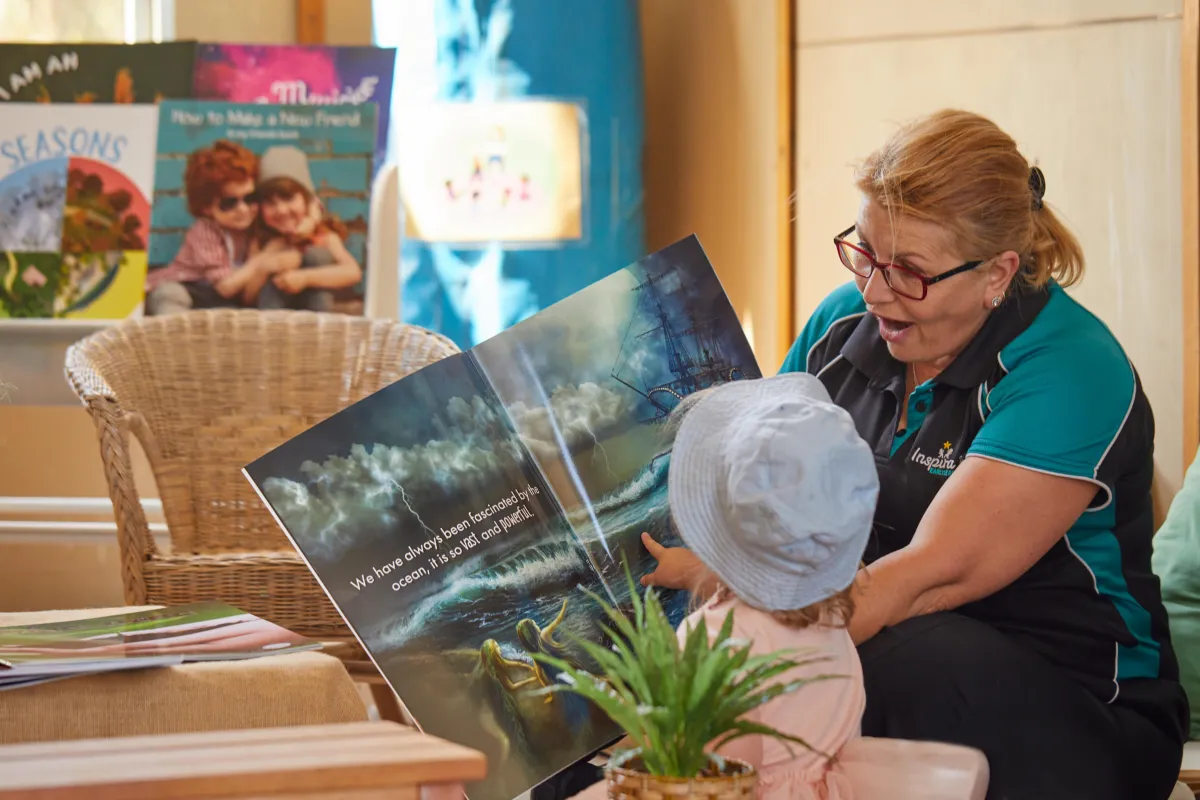
Three Effective Activities For 2-Year-Old Children In Childcare For Overall Growth
At 2 years old, development isn’t isolated. It’s multi-dimensional with brain growth, movement, language, emotions, and social skills all building all at once through an integrated learning journey. That’s why the best activities for 2-year-olds in childcare often look like play: play-based learning is how toddlers practise real-life thinking and behaviour in a way their brains can actually absorb.
In Australian early learning settings, this fits closely with the EYLF (Early Years Learning Framework) approach: children learn through responsive, play-based experiences, supported by warm relationships and safe, engaging environments. If you’re touring centres (or already enrolled) and wondering what “good learning” looks like for a two-year-old, it might start with how you perceive the way childcare operates their activities.
What’s Happening Developmentally At Age Two
Two-year-olds are often in a “big growth in a small body” stage: curious, energetic, and fiercely independent. But it’s a double-edged sword, while helping children learn actively, it can be challenging to regulate their emotions once it’s too much to handle with so limited tools. This is common development for their age group, as discussed further in the overview stages of development.
Compared to older groups, this age group hasn’t had languages to communicate with. Mostly, younger children with their broken language could feel frustrated because they cannot communicate effectively to express their ideas.
Physical Development You May See
More confident walking, running, climbing, squatting, and beginning to jump
Improving hand control: stacking blocks, turning pages, scribbling, feeding themselves.
Starting to make visions happen
Growing endurance (but still needing rest and calm breaks)
Emotional And Social Development You May See
Strong attachment to familiar adults; still learning to trust new educators
Big emotions and quick shifts (frustration → laughter → tears)
Early empathy starting to show (patting a crying friend, offering a toy)
Parallel play (playing beside others) gradually shifting toward short moments of shared play.
Learn to communicate briefly through non-verbal gestures, or by broken languages.
In quality childcare, you’ll see educators supporting these traits gently through routines, language, modelling, and play.

Three Play-Based Activities Aligned With Mind, Character, Physical Growth
At Inspira Kids, we keep toddler learning simple: strong bodies, growing minds, and kind, confident character built through play. That’s why the best activities for 2 year olds in childcare are the ones that let children move, explore, and practise social skills in everyday ways.
Below are three easy games that support whole-child development across our three pillars, and they’re the kind of experiences you can expect in a quality toddler program.
1) Improving Mind With Movement & Sorting Alphabets Or Blocks
This blends early thinking skills (sorting, matching, memory) with movement, which is perfect for toddlers who learn with their whole body. Developing from sorting colors, it’s ideal to let toddlers get their hands on different shapes and textures.
What you need
Large foam letters, alphabet cards, coloured blocks, or shape blocks. To capture their attention, utilise multi-shape blocks with colorful displays.
2–4 baskets/hoops or taped “parking spots” on the floor
A short clear space (indoors or outdoors)
How it works
Place baskets/hoops a few steps away from the blocks/letters.
Invite your child to “deliver” one item at a time:
“Can you find a red one?”
“Can you find a circle?”
“Can you bring me A?” (only if they’re interested)
Celebrate effort and narrate what they’re doing:
“You looked, you chose, you carried it over. Great try!”
Tips to conduct:
Educators should keep it flexible: if a child loses interest in sorting, they might switch to “posting” blocks through a box, or stacking, or simply collecting. That adaptability is a good sign. Don’t pressure them into playing one game only, let their imagination guide them.
2) Developing Character With Guided Pretend Play & Social Role Play
Toddlers learn “how to be with others” through pretend scenarios, especially when an adult helps them enter and stay in the play. Usually, children tend to play imitating games, doctor check-up, cooking, cleaning, pretending to be a guitar player,... These are all common as it reflects their perception of surroundings.

What you need
Toy kitchen items, dolls, prams, dress-ups, doctor kit, tool kit, or a simple box “shop”
A few simple phrases educators can model
How it works
Set up a familiar scenario: café, grocery shop, doctor, bus, family dinner.
Adult starts with a simple role and invites the child in:
“I’m the customer. Can I have a banana?”
“Oh no, Teddy feels sick. Can you help?”
Gently coach social skills inside the play:
“You can say ‘my turn’.”
“Let’s give Ella a cup too.”
“We can wait for our turns.”
Tips to conduct:
You want to see educators joining briefly to scaffold play, then stepping back so children can lead. In many cases, children might use these opportunities to form their suitable play groups, and that works too. You should avoid forcing them to accept somebody new too often, as it might cause some adverse effects.
3) Stimulating Physical Through Sensory Exploration Stations
Sensory play is learning with their bodies. It supports brain-body connection, fine motor strength, and regulation - especially for toddlers who struggle with transitions or big feelings.
What you need
A tub with water, sand, rice, oobleck, playdough, or nature items (leaves, sticks)
Scoops, cups, funnels, spoons, brushes, tongs
Towels and a clear “sensory rules” routine (hands stay low, tools are gentle
How it works
Offer one sensory option at a time (too many choices can overwhelm toddlers).
Add simple tools and show one action: scoop, pour, press, pinch, brush.
Use calm language and slow pacing:
“Pour… stop… pour.”
“Squeeze, squeeze, now let go.”
Extend interest with small challenges:
“Can you fill the cup to the top?”
“Can you find the hidden block?”
Tips to conduct
Quality sensory play is supervised, purposeful, and hygienic, with educators narrating and extending learning rather than letting it become chaotic. This also is a great time to observe the child at close distance, to see if they whether or not need special attention.

A Gentle Note On Choosing A Centre For Children Who Are 2 Years of Age
When comparing childcare options, ask your educators:
“How do you support social-emotional skills at age two?”
“What does play-based learning look like in your toddler room?”
“How do you use outdoor play for learning, not just playtime?”
“How do you extend children’s interests during activities?”
Centres that can answer clearly, and describe learning across Mind, Character, and Physical development are usually the ones supporting overall growth in the way two-year-olds truly need. It is also preferred if they proactively provide feedback or ask parents prior information to tailor activities, ensuring equal development.