How to Form Effective Communication With Children: Strategies for Educators
Under the development of languages, it might be hard to communicate with children, especially when adults are under pressure. That is why learning how to communicate effectively is how adults build trust, support emotional development, guide behaviour, and help children feel understood.
This article will help you understand how effective communication helps children understand routines, express feelings, solve problems, and build secure relationships with the adults who care for them.
How Communication Helps In Early Childhood
Young children rely on adults to help them make sense of the world. The way adults speak and listen can shape how children feel about themselves, how they manage emotions, and how they relate to others.
It’s understandable that sometimes parents can not comprehend what children are trying to say. Understanding what children are saying will help both sides feel less pressure; children can understand their parents' guidance, and conversely, parents will feel more at ease knowing they can grasp their children's thoughts.
The National Quality Standard recognises that relationships with children should be responsive and respectful, and should promote children’s sense of security and belonging. This makes communication an important part of quality early childhood education and care.

What Effective Communication With Children Looks Like
Effective communication with children is not only about giving instructions. It is about how adults speak, how they listen, and how they model communication in everyday moments.
Young children are still learning how to express needs, manage feelings, and understand others. Clear communication helps them feel supported while giving them simple words and actions they can copy over time.
A helpful way to think about communication with children is through three everyday habits:
Speak Clearly: Use simple words, short sentences, and a calm tone so children can understand what is happening and what they need to do next.
Listen Carefully: Give children time to respond, notice their body language, and show them that their thoughts and feelings matter.
Model Respectful Communication: Children learn from what adults do. When adults speak kindly, wait their turn, apologise, or explain feelings calmly, children begin to practise these habits too.
These three habits can happen during play, meals, transitions, group time, outdoor routines, and emotional moments. Over time, they help children build confidence in expressing themselves and connecting with others.
Ways To Communicate Effectively With Children
Effective communication with children requires patience and the right methods. Below are some simple ways to help adults understand children better and communicate with them more effectively.
Speak Clearly And Use Simple Words
Children respond better when instructions are short and specific. Instead of saying, “Stop being silly and behave properly,” adults can say, “Walking feet inside, please.” Instead of saying, “Be careful,” they can say, “Hold the rail with both hands.”
Specific language helps children understand exactly what is expected. It also teaches them what to do, not only what to stop doing.
During daily routines, clear sentences such as “It is time to wash hands before lunch” or “Paint stays on the paper” are easier for children to follow than long explanations.

Listening With Attention
Listening to a child means paying attention to both words and behaviour. A child may say what happened, but they may also show their feelings through their face, body, silence, movement, or play. Taking a moment to notice these cues can help adults respond with more care.
For example, if a child says, “He took my truck,” the adult does not need to solve the problem immediately. A more helpful response might be, “You were using the truck and now you feel upset. Let’s work out what happened.”
Another point is to try to capture the message of what children say. This can be done with an attentive attitude, repeating back what they have said and making eye contact to show your attention.
Model The Communication You Want Children To Use
Children learn communication by watching adults. If adults use calm words, respectful tone, and patient listening, children are more likely to copy those behaviours.
Modelling can happen in simple ways. An educator might say, “I’m sorry, I interrupted you. You can finish your sentence.” A parent might say, “I feel frustrated, so I’m going to take a breath before I speak.” These moments show children how communication works in real life.
Adults can also model phrases children may need, such as “Can I have a turn?”, “I need help,” “Please stop,” or “I feel upset.” Over time, children can begin using these words more independently.
Give Children Time To Respond
Some children need extra time to understand a question or instruction. This is especially common during transitions, group routines, or emotional moments.
After asking a question or giving an instruction, adults can pause for a few seconds before repeating it. This gives the child time to think, answer, or show what they need.
A slower pace can make communication feel less pressured and more supportive.
Use Choices To Support Cooperation
Simple choices can help children feel involved while still keeping the adult’s boundary clear. For example, instead of asking whether a child wants to get ready, an adult might say, “It is time to get dressed. Do you want the blue shirt or the green shirt?”
The routine is still clear, but the child has a small choice within it. This supports independence and reduces frustration.
Choices work best when they are limited and realistic. Too many options can overwhelm young children.
Name Feelings And Guide Behaviour
Children often need help connecting feelings with words. Adults can support this by naming what they see: “You are frustrated because the tower fell,” or “You feel sad because Mum has gone to work.”
Naming the feeling does not mean the child can do anything they want. Adults can still set clear boundaries. For example, “You are angry. I won’t let you push. I can help you use words.”
This helps children understand that feelings are accepted, while behaviour still needs safe limits.

How Educators Communicate With Children In Early Learning Settings
In early learning settings, educators communicate with children across the whole day. Communication happens during arrival, meals, play, rest, group time, outdoor routines, conflict, transitions, and pick-up.
Instead of waiting for children to come up with conversations, educators could use simple conversation starters to break the ice. These simple prompts are great ways to understand what children are thinking before they even understand if they need support from adults.
A warm greeting at the start of the day can help a child feel recognised and safe. Clear explanations before transitions can help children understand what is coming next. Calm guidance during conflict can help children learn how to use words, wait, take turns, and care for others.
Family communication is also important. When educators share updates about a child’s meals, rest, play, emotions, and development, families can better understand their child’s day. This connection between home and care helps children feel more supported across both environments.
Effective Communication With Children At Inspira Kids
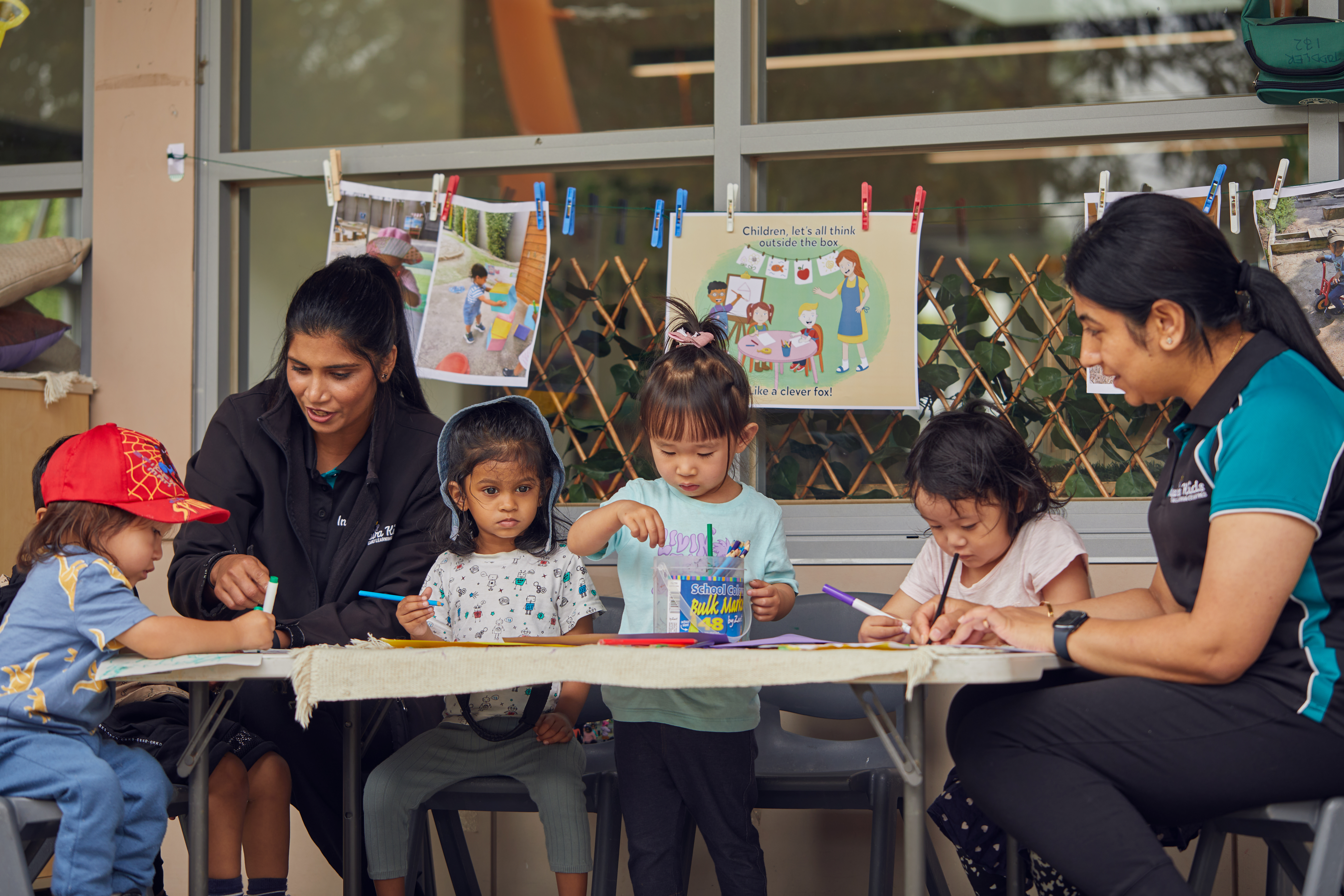
At Inspira Kids, communication is part of how educators build trust, support development, and help children feel secure throughout the day. It happens during play, meals, group time, outdoor routines, rest time, transitions, and everyday conversations.
Within a child-led program, educators pay close attention to what children say, do, choose, and show through their behaviour. A child may communicate through words, gestures, facial expressions, movement, play, or silence. By observing these cues, educators can respond with care and guide children in ways that match their needs, interests, and stage of development.
At Inspira Kids, effective communication is not treated as a separate lesson. It is part of the everyday care, relationships, and child-led experiences that help children grow with confidence. To see how Inspira Kids supports children through responsive communication and development-focused routines, book a tour at your nearest centre.