
The Benefits Of Imaginative Play In Early Childhood
Imaginative play is one of the simplest ways children make sense of the world. When a child pretends a block is a phone, runs a pretend shop, cares for a teddy bear at the “doctor”, or creates a story with toys, they are doing more than playing for fun.
Pretend play in early childhood gives children space to explore ideas, practise language, express feelings, solve problems, and understand different roles. It also supports child-led learning because children can follow their own ideas, create scenarios, and test new ways of thinking through play.
This article explains what imaginative play means, why it matters for toddlers and preschoolers, and how parents and educators can support pretend play without taking over.
What Is Imaginative Play?
Imaginative play is when children pretend, create roles, act out situations, or use objects to represent something else. A child may turn a cardboard box into a car, a block into a phone, a scarf into a cape, or a group of toys into a family.
This type of play is also called pretend play, role play, dramatic play, or creative play. It often begins with simple imitation, such as pretending to cook, talk on the phone, feed a doll, or drive a car. As children grow, their play may become more detailed, with characters, storylines, problems, rules, and conversations.
Imaginative play can happen at home, in childcare, in preschool, or outdoors. It does not need expensive toys. Everyday objects, loose parts, dolls, blocks, puppets, blankets, toy food, dress-up clothes, or natural materials can all become part of a pretend world. The important thing is that children have space to lead the play, try ideas, and use their imagination in a way that feels safe and supported.

Why Imaginative Play Is More Than “Just Play”
Some adults may see pretend play as a break from learning. In early childhood, however, play is one of the main ways children learn.
Through imaginative play, children can explore what they see in daily life. They may act out going to the shop, visiting the doctor, cooking dinner, caring for a baby, helping an animal, or travelling on a bus. These play moments help children understand the roles people have in the world around them.
Imaginative play also lets children express ideas or emotions they may not yet be able to explain directly. This kind of play supports early thinking because children make decisions, solve pretend problems, create rules, and adjust the story as they go. They are not simply copying adults. They are actively building meaning through play.
Imaginative Play Benefits For Young Children
The benefits of imaginative play can be seen across communication, creativity, problem-solving, social skills, and emotional development.
Language And Communication
Pretend play gives children many chances to use words in context. They may ask questions, give instructions, explain roles, describe what is happening, or speak as a character.
For example, during pretend shop play, a child might say, “How much is this?”, “I need three apples,” or “Your turn to pay.” During doctor role play, they might say, “Teddy is sick,” or “He needs a bandage.”
These small conversations support language development through pretend play. Children learn spelling lessons and practise new words, sentence patterns, listening, turn-taking, and storytelling naturally.
Creativity And Imagination
Creative play benefits children by giving them freedom to think beyond what an object usually does. A stick can become a magic wand, a spoon can become a microphone, and a blanket can become a cave.
This helps children understand that ideas can be flexible. They can imagine different possibilities, create new scenarios, and make something from very simple materials.
Creativity in early childhood is not about producing a perfect result. It is about trying ideas, combining materials, and using imagination to make play more interesting.
Problem-Solving And Early Thinking
Imaginative play often includes small problems. The shop has run out of food. The teddy is sick. The bridge is broken. The baby is crying. The puppet cannot find its home. These common problems are what children see everyday but cannot participate in due to their ages.
When children create or respond to these situations, they practise problem-solving. They may decide what needs to happen next, choose a role, find a material, change the story, or ask someone else to help.
These moments help children build early thinking skills. They learn to plan, adapt, test ideas, and keep the play going. This also connects with the habits of mind, as children practise thinking flexibly, applying past knowledge, asking questions, and working with others during pretend play.

Social Skills Through Play
Role play for preschoolers often involves other children. This gives them a chance to practise cooperation, through conditional relationships and negotiation, children will eventually learn how to cooperate with their peers.
Children may decide who will be the shopkeeper, who will be the customer, what the rules are, and how the story should continue. These conversations are not always smooth. Children may disagree, change their minds, or need help from an adult.
With gentle support, pretend play can help children learn how to join in, respect another child’s idea, wait for a turn, and solve small social problems.
Emotional Understanding And Empathy
Imaginative play allows children to explore feelings and relationships. A child pretending to be a doctor may comfort a sick teddy. A child playing family may care for a baby doll. A child creating a story may talk about a character feeling sad, scared, happy, or brave.
These play moments help children think about how others may feel. They also give children a safe way to express their own emotions through characters, toys, and stories.
Over time, this can support empathy, emotional vocabulary, and social understanding.
Confidence And Self-Expression
When children lead pretend play, they get to make choices. They can decide the role, the story, the materials, and the direction of the play.
This supports confidence because children feel that their ideas matter. They can try new words, act out new roles, and express themselves without needing one correct answer.
For some children, imaginative play may feel easier than direct conversation. A puppet, doll, or toy character can give them a gentle way to share ideas, practise communication, and join social play.
How Adults Can Support Imaginative Play Without Taking Over
Adults can support imaginative play without directing every step. The best approach is to give children space to lead, make choices, and change the storyline in their own way.
In early learning settings, educators can prepare different play areas that invite children to explore roles and ideas independently. This may include a library corner, a shop setup, a dollhouse area, a hospital or vet corner, a small home area, or a construction space. These areas give children options, so they can choose the type of pretend play that matches their interests.
Educators can observe how children use these spaces, then join only when invited or when gentle support is needed. Simple prompts such as “What happens next?” or “Who needs help?” can extend the play without taking control.
When children have access to open-ended materials and different play corners, they can build stories, solve problems, and connect with peers who share similar interests.
Practising Habits Of Mind Through Imaginative Play At Inspira Kids
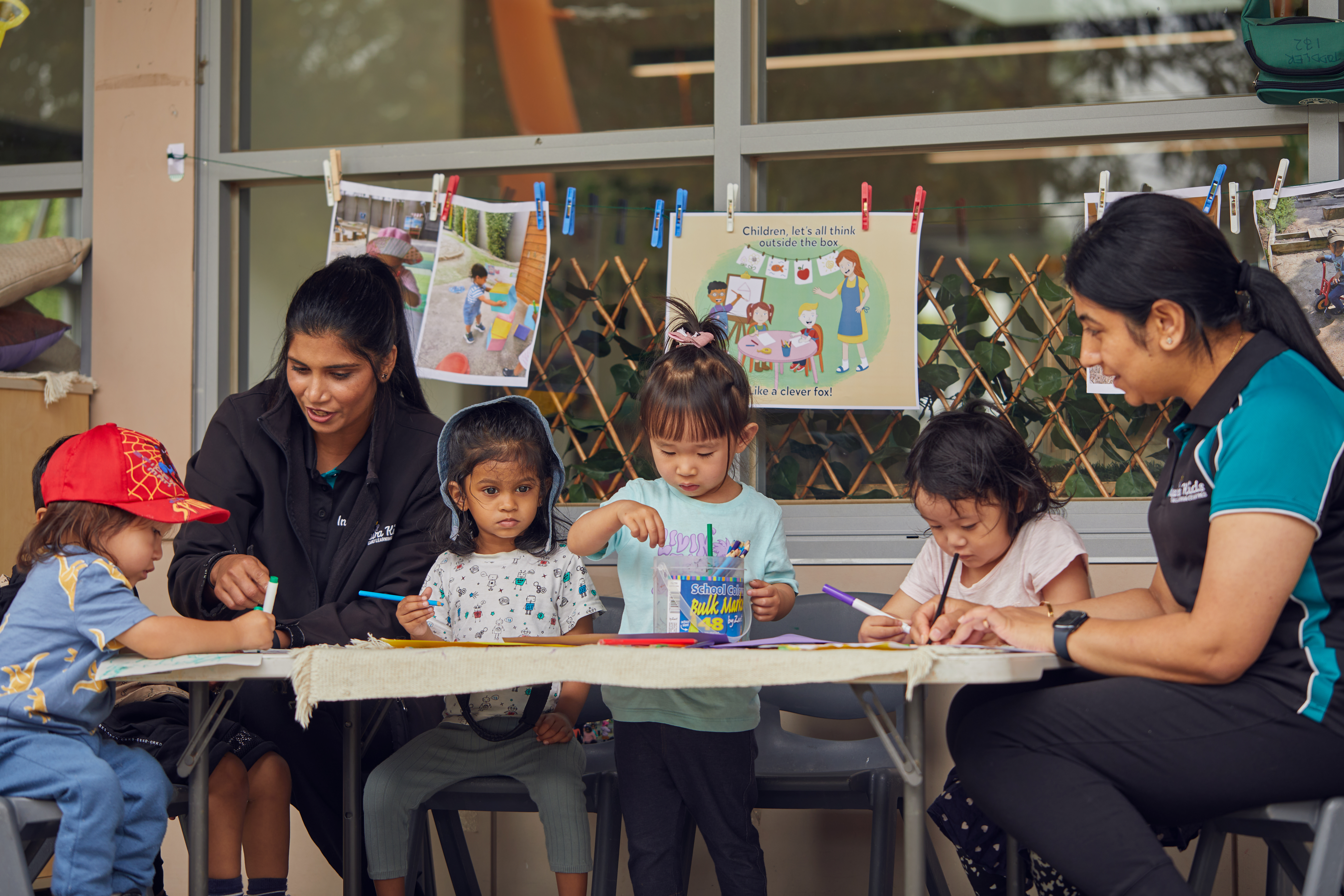
At Inspira Kids, imaginative play is valued as part of early learning and development. Purposeful play gives children space to communicate, explore roles, express ideas, and build confidence in a safe, nurturing, and engaging environment.
Through guided play, educators can support children as they create stories, take on roles, solve pretend problems, and interact with others. To support different children's plays, Inspira Kids focuses on different learning and playzones, tailoring to children’ needs. There is a quiet corner for children exploring new ideas, energetic play zones for collaborative games.
A child can be a shopkeeper, doctor, builder, parent, animal rescuer, storyteller, or inventor.
By providing open-ended materials, warm guidance, and responsive learning environments, Inspira Kids helps children use pretend play to grow their communication, imagination, social skills, and self-expression.