What Is Play-Based Learning In Early Childhood?
Play-based learning is one of the most important parts of early childhood education because young children learn best through active, hands-on experiences. When children build, pretend, dig, paint, climb, sort, or tell stories, they are not only playing. They are practising early skills in movement, communication, problem-solving, social connection, and confidence.
In early childhood, play gives children a natural way to explore ideas and understand the world around them. It becomes learning when educators guide the experience with clear purpose, thoughtful questions, and development-focused support.
What Is Play-Based Learning?
Play-based learning is an approach where children learn through active, hands-on, and engaging play experiences. These experiences can be child-led, educator-guided, or a mix of both.
The key point is that play-based learning is not the same as children playing without support. In free play, children may choose what they want to do and explore independently. In play-based learning, educators observe what children are doing and use those moments to support specific areas of development, such as language, social skills, early maths, creativity, movement, or problem-solving.
For example, when children build a bridge with blocks, they are not only stacking materials. They may be learning about shape, size, balance, position, and structure. If they build with other children, they also practise communication, turn-taking, negotiation, and shared decision-making.
ACECQA explains that play-based learning recognises the intentional roles of both children and educators. When children play with others and interact with adults, they build relationships, test ideas, challenge thinking, and create new understandings. Educators support this by acting deliberately and purposefully to extend children’s learning through play.
Why Play-Based Learning Matters In Early Childhood
Young children learn best through active experiences that connect with their world. Play gives them space to practise new skills in a way that feels natural and engaging.
Supporting Social Development
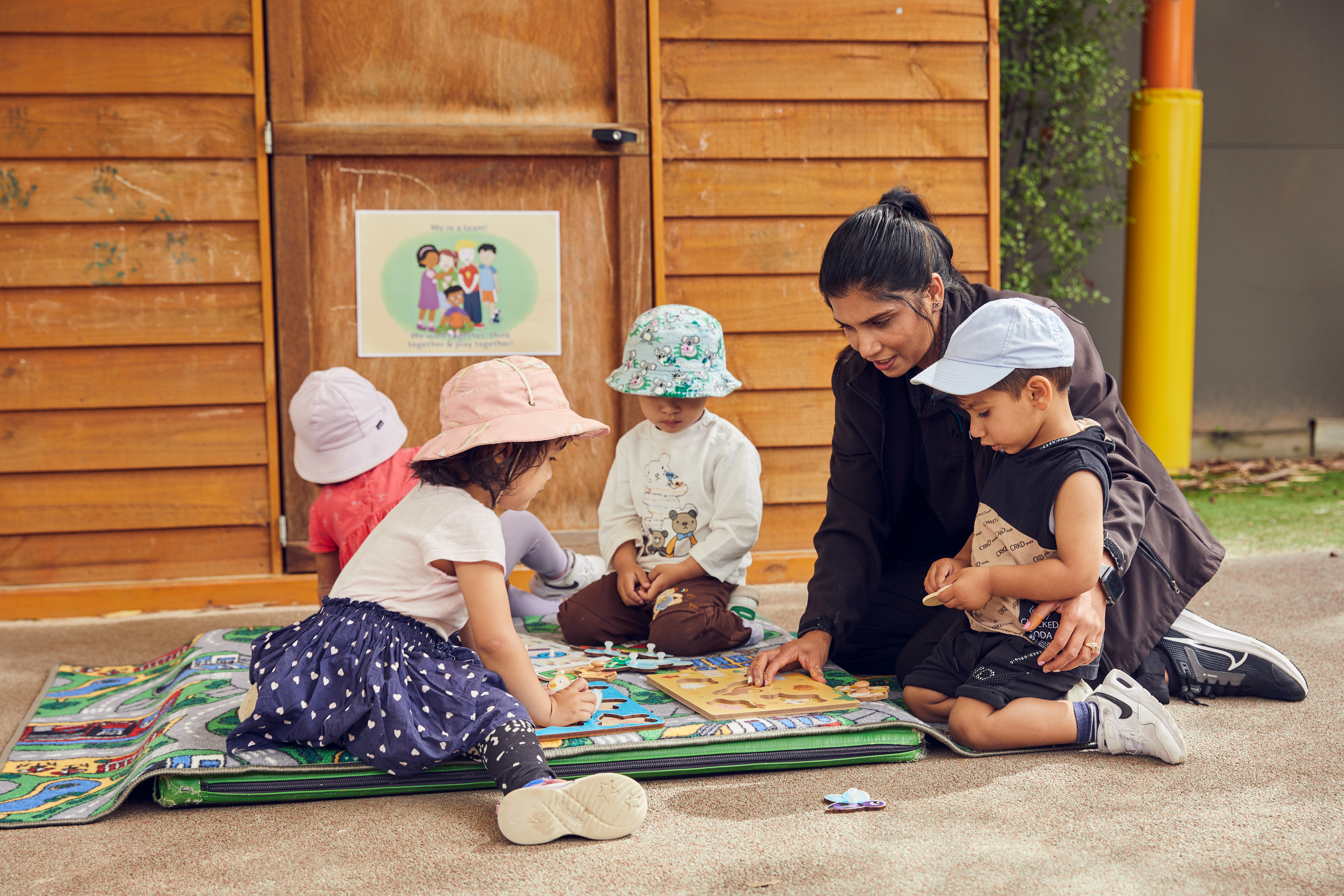
Shared play gives children real opportunities to understand other people. They learn how to join a group, wait for a turn, listen to another idea, manage small disagreements, and make space for someone else’s needs.
For example, when children build a pretend shop together, they need to decide who will be the customer, who will prepare the food, what items they need, and how the game will continue. These small decisions help children practise cooperation, language, patience, and flexible thinking.
This is also where educator guidance matters. A child may not know how to ask for a turn or respond when another child changes the game. Educators can model simple language such as, “Can I join?”, “I’m still using this,” or “Let’s make a plan together.” Over time, children begin to build the social confidence they need for group learning and school-ready routines.
The National Quality Standard recognises that responsive, respectful relationships help promote children’s sense of security and belonging, which is why social interaction is an important part of quality early childhood education and care.
Enhancing Language And Communication Skills
Play gives children a reason to use words. They may explain what they are making, describe a pretend role, ask questions, name objects, solve a problem, or tell a story.
In pretend play, a child might say, “You be the doctor, and I’ll bring the baby.” In block play, educators can introduce vocabulary to describe shapes and sizes such as tall, strong, wobbly, under, beside, across, bigger, and smaller. These words become easier to understand because children are using them in a real situation.
Educators can extend language naturally during play. If children are playing with water, an educator may introduce words such as pour, full, empty, float, sink, heavy, and light. If children are creating a pretend café, the educator may help them use words imitating the usual social scenarios, helping children feel familiar with similar social situations.
Building Problem-Solving Through Purposeful Play
Play-based learning gives children practical opportunities to think, test, adjust, and try again. When play has purpose, that is when children start to learn how to incorporate thinking processes into their plays.
For example, if a child is building a house with blocks and the structure keeps falling down, they may begin to look for a wider block, change the base, move pieces around, or ask another child for an idea. At this moment, the child is practising early problem-solving through play.
This kind of purposeful play supports logical thinking, patience, communication, and confidence. Children learn that problems can be explored step by step, and that trying a different way is part of learning.

Encouraging Emotional Awareness Through Play
Play gives children a safe way to express and explore feelings. A child caring for a doll, feeding a teddy, or putting a toy baby to sleep may be practising care, empathy, and emotional understanding.
Pretend play can also help children process familiar routines. A child may act out going to the doctor, saying goodbye at childcare, cooking dinner, or looking after a younger sibling. These moments show how children use play to organise what they notice in everyday life.
Educators can support emotional learning by naming what they see. For example, they might say, “You are taking care of the baby,” or “The teddy feels sad, and you are helping him feel safe.” This helps children connect actions with feelings and begin building emotional language.
Different Types Of Play-Based Learning
Play-based learning can take many forms across the day. Some types of play are active and social, while others are quiet, creative, sensory, or focused. A balanced early learning environment gives children different ways to explore, depending on their interests, energy, and stage of development.
Sensory Play
Sensory play gives children opportunities to explore materials through touch, sight, sound, smell, and movement.
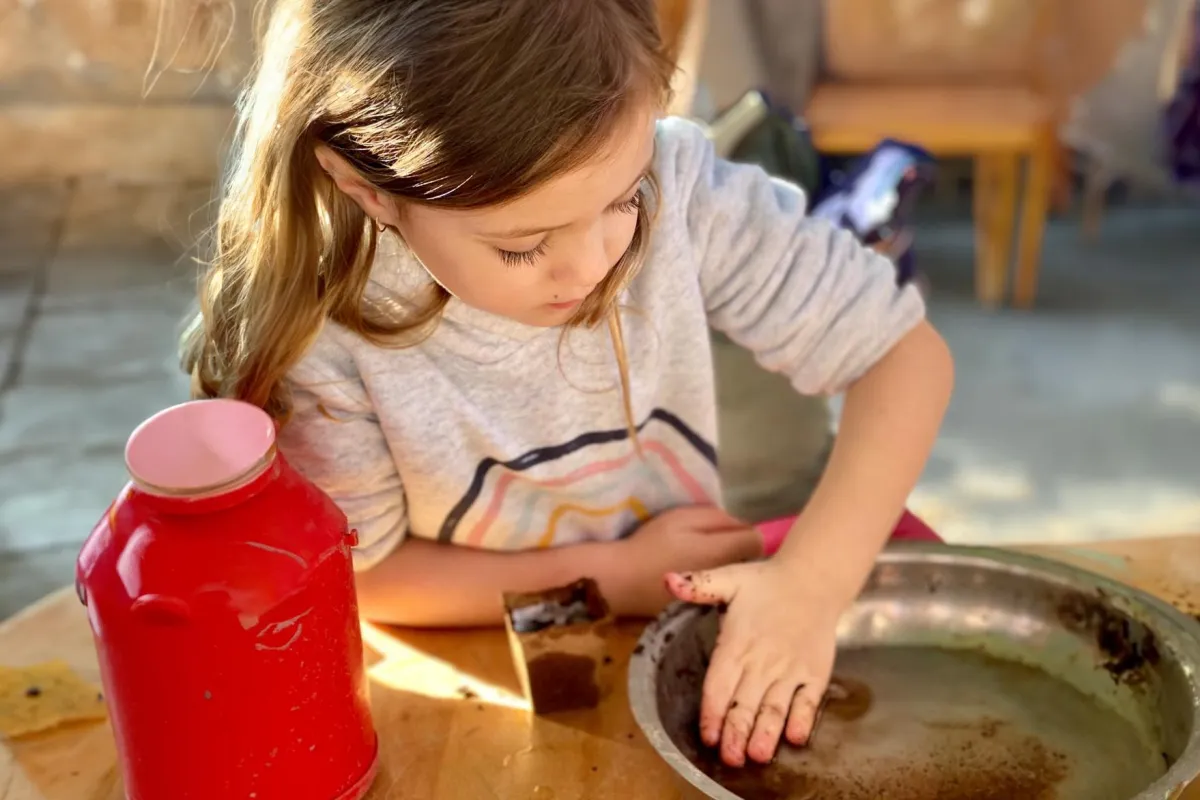
For young children, sensory play is often calming and engaging because it allows them to focus on what they can feel and notice. A child pouring water between cups is learning about volume, movement, and weight. A child pressing dough, rolling it, or cutting it into shapes is strengthening hand muscles while exploring texture and pressure.
Educators can extend sensory play by adding simple language and questions. Instead of directing the activity, they might say, “The dough feels soft today,” or “What happens when we add more water?” This keeps the experience open while helping children build vocabulary and curiosity.

Constructive Play
Constructive play happens when children build, arrange, design, or create something. This may involve blocks, boxes, recycled materials, loose parts, magnetic tiles, planks, fabric, or natural objects.
This kind of play helps children think about shape, size, balance, space, and planning. A child building a road from wooden blocks may need to work out where the road starts, how it turns, and whether there is enough space for a toy car to pass through. Constructive play is valuable because children can see their thinking become visible. They make a plan, test it, change it, and often return to the same idea in a more detailed way the next day.
Pretend Play
Pretend play allows children to explore roles, relationships, routines, and imagination. They may play with families, shops, doctors, cafés, builders, animals, teachers, or community helpers.
Through pretend play, children practise language and social understanding. They learn how people speak to each other, how routines work, and how different roles connect. This type of play can also help children process real-life experiences. These moments give children a safe way to reflect on their experiences, therefore learning appropriate responses to solve similar scenarios in the future.
Outdoor Play
Outdoor play gives children room to move, explore nature, and engage with changing environments. It may include running, climbing, digging, gardening, balancing, water play, sand play, collecting leaves, or noticing insects and weather.
The outdoor environment offers experiences that indoor spaces cannot fully provide. Children can test their balance on uneven ground, observe shadows, feel wind, notice seasonal changes, and use larger movements with more freedom.
With educator supervision, children can practise safe risk awareness, coordination, strength, and independence while staying connected to the natural world.
Creative Play
Creative play gives children a way to express ideas through materials such as drawing, painting, clay work, collage, music, movement, and storytelling.
For preschool-aged children, the goal is not perfect artwork. The value is in choosing colours, shaping clay, drawing details, telling a story, or explaining what they made. These activities can support fine motor skills, language, imagination, and confidence.
Creative play can also connect with social and early academic skills. A child drawing a family picture may talk about people and relationships. A child shaping clay into food may count pieces, name colours, or describe size and shape. A group painting a shared mural may practise cooperation, turn-taking, and listening to others’ ideas.
The Role Of Educators In Play-Based Learning
Educators play an active role in play-based learning, but their role is not to control every moment. They observe children’s interests, prepare thoughtful environments, and guide learning when the moment is right.
For example, if children are building with blocks, an educator may use the play to introduce simple concepts used in Mathematics, such as shape, height, balance, strong, wide, narrow, beside, under, and across. If children are building together, the educator may also guide social skills such as sharing materials, waiting, listening, and making a group plan.
This is how play becomes purposeful. Children still lead with curiosity and imagination, but educators help connect the experience to language, early maths, problem-solving, communication, and confidence.
Educators also support language, relationships, and confidence during play. They introduce useful words, help children take turns, guide social moments, and notice each child’s progress.
How Parents Can Support Play-Based Learning At Home
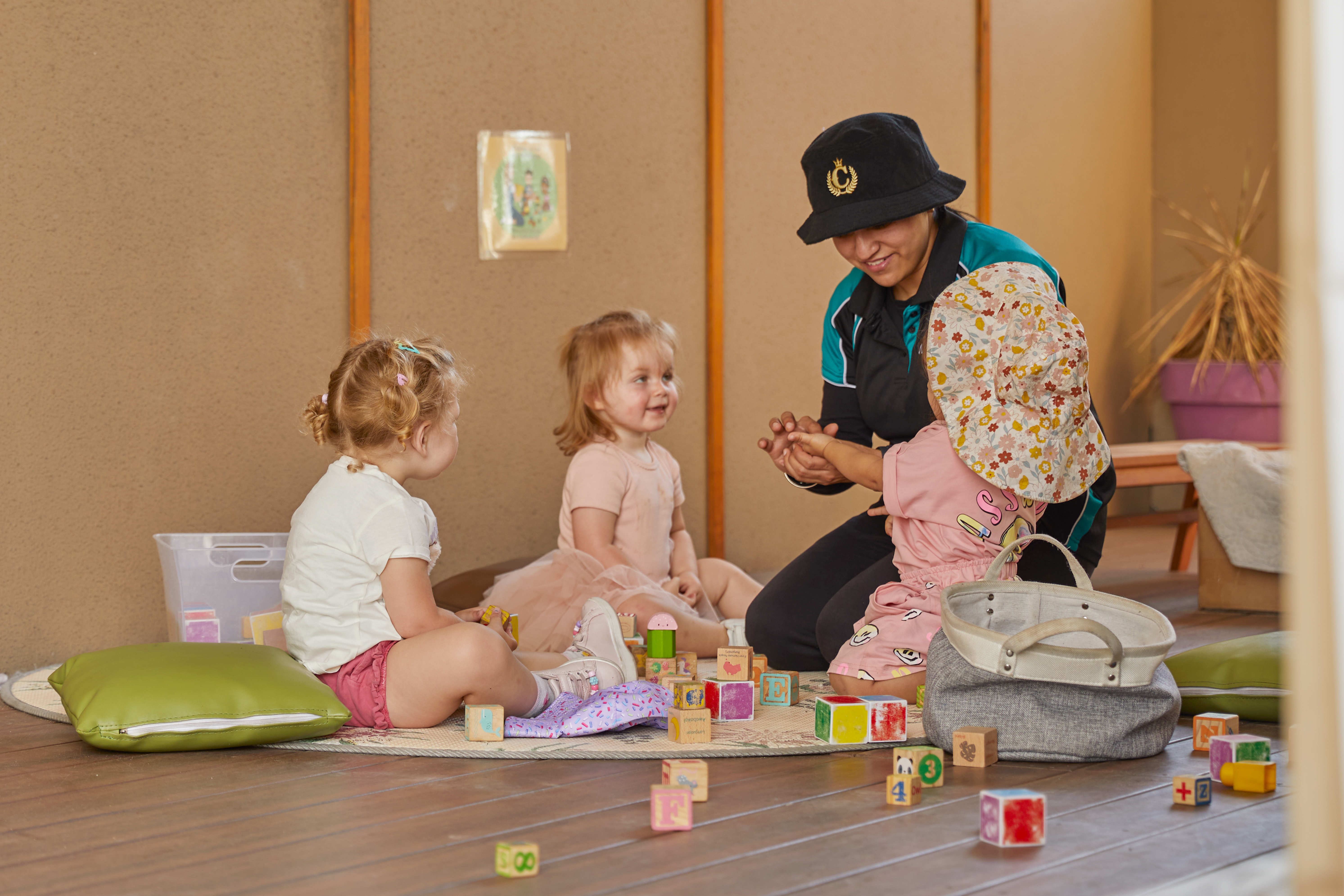
Parents can support play-based learning at home through simple everyday moments. Children do not need expensive toys or structured lessons to learn through play. Many valuable play experiences come from ordinary routines, household materials, outdoor spaces, and shared conversations.
Several cooking activities like preparing a simple snack can become a play-based learning moment. A child may wash fruit, sort pieces by colour, count slices, spread soft cheese on toast, or help place food on a plate. During this routine, they practise hand control, language, sequencing, choice-making, and confidence with everyday tasks.
Parents can also support play by giving children time to explore without rushing to correct the result. If a child is building with boxes, the structure does not need to look neat. If a drawing is hard to recognise, it does not need to be fixed. What matters is that the child is making choices, testing ideas, and expressing their thinking.
A helpful adult role is to stay interested and ask simple questions. “Tell me about what you made,” “What should happen next?”, or “How did you work that out?” can encourage children to use language, explain ideas, and continue thinking.
Play-Based Learning At Inspira Kids
At Inspira Kids, play-based learning is part of how children are supported across the day. Educators create safe, engaging environments where children can explore, move, communicate, create, and build confidence.
This approach is supported through Inspira Kids’ broader early learning program, including the C.O.R.E Literacy Program, Reggio Emilia-inspired learning environments, and Habits of Mind. These elements help educators create classrooms where children can practice their skills through interactive plays.
Play is not just a break from learning. In early childhood, it is one of the main ways children make sense of the world. To learn more about how Inspira Kids supports development through purposeful play, book a tour at your nearest Inspira Kids centre.