Our Insights
Understanding Your Child Better
Our Insights
Understanding Your Child Better
Our Blog

Kindergarten vs Childcare: What’s the Difference?
Many parents use the terms “childcare” and “kindergarten” interchangeably, but they serve different purposes within the Early Childhood Education and Care (ECEC) system. While both support children’s learning and development, they differ in structure, goals, funding and daily routines. Understanding these differences helps families make confident decisions about their child’s early learning journey.
This article explains what sets childcare and kindergarten apart, outlining their main features and benefits so you can choose the right option for your child.
What is Childcare?
Childcare provides care and education for young children, typically from 6 weeks to 5 years of age, in a safe, nurturing and stimulating environment. Its primary purpose is to support families, especially working parents, by offering consistent, high-quality care throughout the day. Services include long day care, family day care and occasional care, all operating under the National Quality Framework (NQF) to maintain quality and safety standards.
Childcare programs go beyond supervision. They promote early learning through play-based experiences that build children’s social, emotional, physical and cognitive skills. Many centres take a holistic approach, integrating learning with nutrition, rest and creativity within a flexible routine. Meals, naps and outdoor play are part of the daily rhythm, creating an environment where children can learn and grow while parents manage work and family commitments.
Explore more: 6 Best Childcare Centres in 2026
What is Kindergarten?
Kindergarten is an early education program for children in the year or two before they start primary school, usually between three and five years of age. Its main goal is to prepare children for school by developing foundational skills in communication, literacy, numeracy and social interaction through play-based learning.
Programs are guided by the Early Years Learning Framework (EYLF) and led by qualified early childhood teachers. Kindergarten may be offered as a stand-alone program or within a long day care setting. Most programs operate during school terms and for set hours each week. Some receive partial or full government funding to make them more accessible to families.
Kindergarten vs Childcare: Key Differences
The main difference between childcare and kindergarten lies in their focus. Childcare centre provides full-day care and early learning for a wide age range, while kindergarten is designed specifically for school readiness and runs for shorter hours. Many centres now combine both, offering kindergarten programs within childcare settings so families can benefit from flexibility and structured learning.
Age Group
Childcare centres cater to children from infancy through to school age, while kindergarten focuses on children aged three to five. Some services provide combined programs, allowing children to experience both care and education in one place.
Time in Care
Childcare generally operates from early morning to late afternoon, offering full-day or part-day options year-round. Kindergarten programs run on school term schedules with shorter hours, often between 9 am and 3 pm. Many families choose childcare that includes an integrated kindergarten program to balance learning with flexible hours.
Curriculum and structure
Childcare uses play-based learning that supports social, emotional and cognitive growth through flexible routines. Kindergarten programs are more structured, introducing early literacy, numeracy and group learning experiences. In integrated centres, children can enjoy the benefits of both, gaining stability alongside school-readiness activities.
Funding
Childcare is supported by the Child Care Subsidy (CCS), which helps reduce costs for families. Kindergarten programs often receive state funding to provide up to 15 hours per week of free or low-cost learning for eligible children. Families using childcare-based kindergarten programs may also receive CCS benefits.
Meals
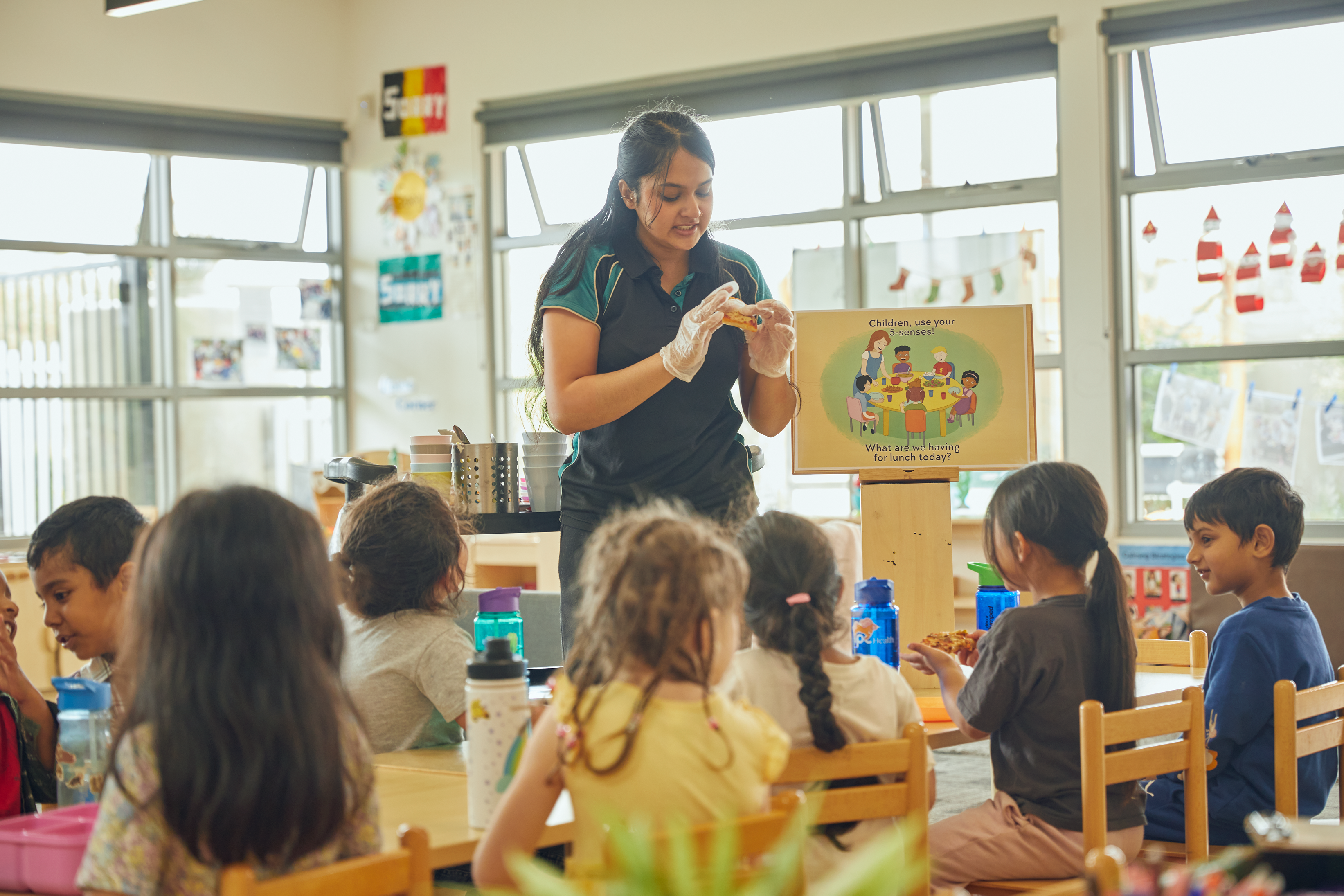
Most childcare services provide nutritious meals and snacks as part of their daily program, encouraging healthy habits and making life easier for families. Kindergarten programs often require children to bring food from home, especially in shorter or school-based settings. Centres such as Inspira Kids continue to provide meals even during kindergarten sessions for convenience and consistency.
Transitions to School
Kindergarten helps children prepare for school routines, expectations and learning environments. Childcare also contributes to this transition by encouraging independence, communication and social skills from an early age. Many childcare services run dedicated school-readiness programs to support a smooth progression into formal schooling.
Siblings
Childcare caters to a wide age range, allowing siblings to attend together and simplifying drop-offs for parents. Kindergarten typically serves only preschool-aged children, so families may need separate arrangements for younger siblings.
Flexibility for Families
Childcare offers greater flexibility with full-day and year-round care. Kindergarten operates during school terms with fixed hours. Families who need both structure and flexibility often choose services that combine kindergarten and childcare programs under one roof.
Conclusion
Both childcare and kindergarten are valuable parts of a child’s early development. Childcare offers flexible, full-day care that supports growth across all developmental areas, while kindergarten provides a focused approach to school readiness. Many families choose a combination of both for the best balance of education, structure and convenience.
Childcare offers nurturing care and learning for children from infancy to preschool, while kindergarten helps build confidence and curiosity for the next stage of learning.
To learn more, book a tour with Inspira Kids and discover how our caring educators create a supportive environment where every child can learn, grow and thrive.