Our Insights
Understanding Your Child Better
Our Insights
Understanding Your Child Better
Our Blog

Math Activities For Preschoolers: 6 Activities That Go Beyond Calculating Worksheets
Math Activities For Preschoolers: 6 Activities That Go Beyond Calculating Worksheets
Besides a common calculation worksheet, what else can we think of when it’s math time? For young children, early maths often begins through play, movement, and everyday routines.
When children sort objects, notice patterns, compare sizes, count toys, or talk about shapes, they are already building important early math skills. Here are some easy math activities for preschoolers that support early learning, tailored to their cognitive development.
Benefits of Learning Math In Cognitive Development
Math helps children develop cognitive functions by encouraging them to notice patterns, compare objects, solve simple problems, and organise information in a clear way. In the early years, this does not only happen through numbers. It also happens when children sort by colour or size, recognise shapes, follow patterns, count objects, or work out which group has more or less.
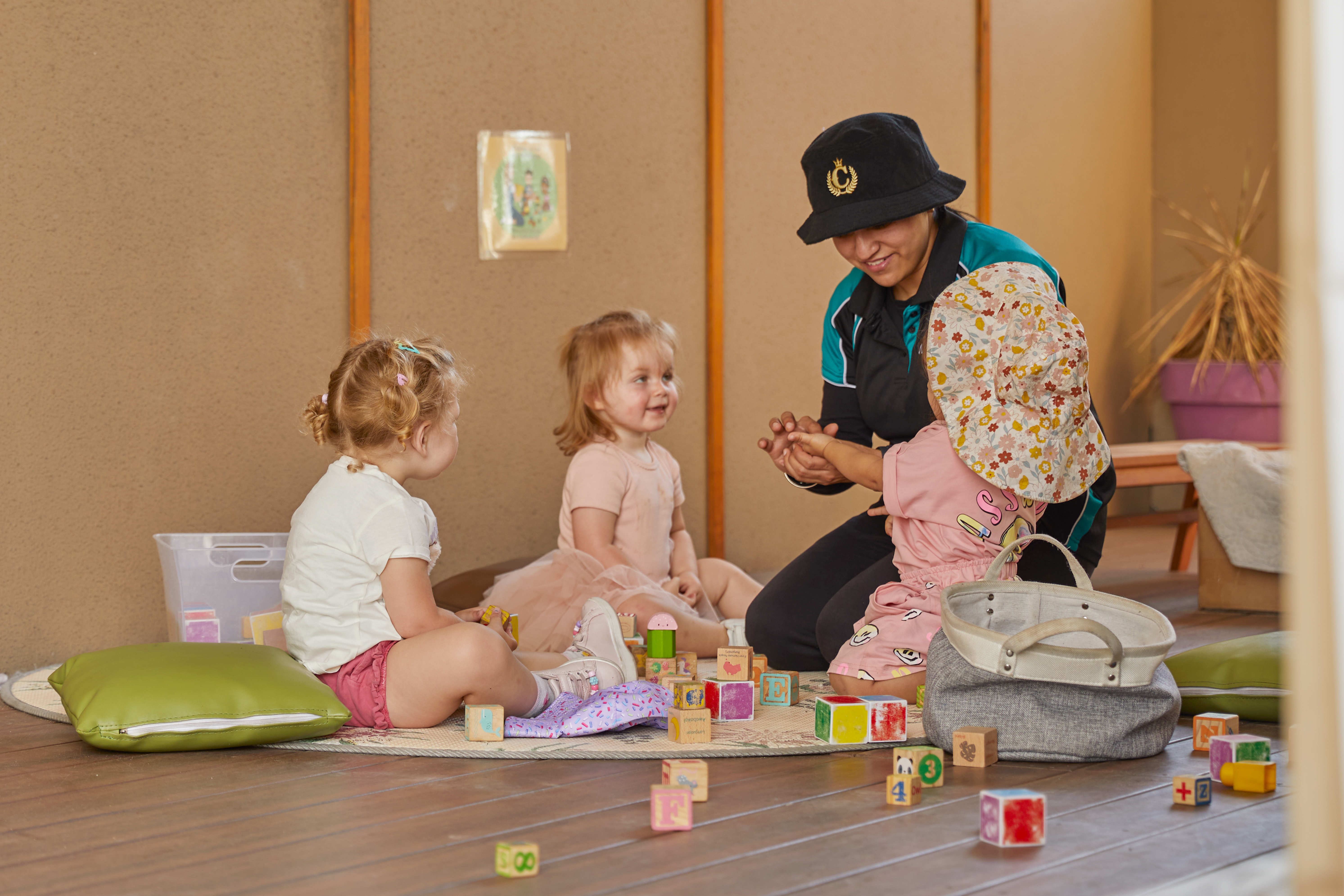
These activities support important thinking skills such as memory, attention, reasoning, and problem-solving. For example, when a child continues a pattern, they are learning to predict what comes next. When they sort objects into groups, they are practising classification and logical thinking. When they count items one by one, they are building concentration and learning how numbers connect to real quantities.
Over time, these early maths experiences help children become more confident in how they think, not just in how they count. They learn to observe more carefully, make simple decisions, and approach problems step by step. All the logical training in the early years can support broader cognitive development later on.
6 Activities That Helps Children Enjoy Learning Math
For preschool-aged children, maths is about much more than counting from one to ten. Early maths also includes matching, sorting, patterns, shapes, comparing size, recognising quantity, and exploring simple measurement.
Counting Games With Everyday Objects
Counting games are one of the easiest ways to bring maths into play. You can use blocks, toy animals, spoons, or anything else you already have at home. Beside counting, you can also help children organize and name the color of objects.
The counting game can be applied to everyday tasks. Ask your child to put a number of eggs into a bowl, line up a certain number of toys, or match a number card to the correct number of items. You can keep it simple at first, then slowly build up as your child becomes more confident.
Beyond teaching counting and number recognition, this tactile approach boosts attention and memory. Asking follow up questions is also great to help children foster reasonings.
Sorting By Colour, Shape, Or Size
Sorting is a strong early maths skill because it helps children notice similarities, differences, and categories. You can ask your child to sort buttons by colour, blocks by shape, or objects by size. You can use simple prompts first such as:
Can you put all the red ones together?
Which ones are big and which ones are small?
Which ones have round shapes? Which square?
These simple questions help children begin to organise information and compare what they see. As children categorize objects, they strengthen their logical thinking while gaining the specific vocabulary needed to develop logical thinking.

Bead Threading And Pattern Play
Beads, pasta, or large threading shapes can be used for both fine motor practice and early maths learning. Children can make simple patterns such as red-blue-red-blue or small-large-small-large.
When they work out what comes next in a pattern, they are building early skills in predicting, comparing, and organising information. These are important foundations for later mathematical thinking, especially as children begin exploring number patterns and simple problem-solving.
Number Hunts Around The House
A number hunt is a simple way to make maths feel active and fun. You can hide number cards around the room and ask your child to find them, or look together for numbers already in your environment, such as on books, clocks, doors, or packaging.
To make it more interesting, you can leave prompts alongside the number, such as “How many books are there on the shelf?” or “How many potatoes in the basket?”. This is not just scavenger hunt, it’s dealing with unexpected events, therefore pushing problem-solving skills to come through.
Matchi ng games offer a powerful way for children to connect written numerals with their concrete values. By physically collecting objects to match a number, children engage in a multisensory experience that reinforces attention and spatial awareness.
Shape Play In Everyday Life
Shapes are an important part of preschool maths. You can talk about shapes while building with blocks, drawing pictures, or walking outside.
Point out circles, squares, rectangles, and triangles in familiar places. A plate might be a circle, a window might be a rectangle, and a roof might look like a triangle. Children often understand shapes more easily when they can connect them to real objects.
Shape play helps children notice patterns in the world around them and builds early spatial awareness. It also strengthens language as they begin to describe what they see more clearly.
Comparing Size And Quantity
Preschoolers can begin learning maths by comparing things in a simple, visual way. You might ask which teddy is bigger, which pile has more blocks, or which stick is longer.
These kinds of questions help children notice relationships between objects. They do not need to know formal maths words straight away. What matters is that they begin thinking about concepts like more, less, bigger, smaller, longer, and shorter.
By the end of this lesson, children will be able to make simple comparisons between objects, like tree branches, phones, toy blocks.
How Simple Maths Activities Support Early Learning
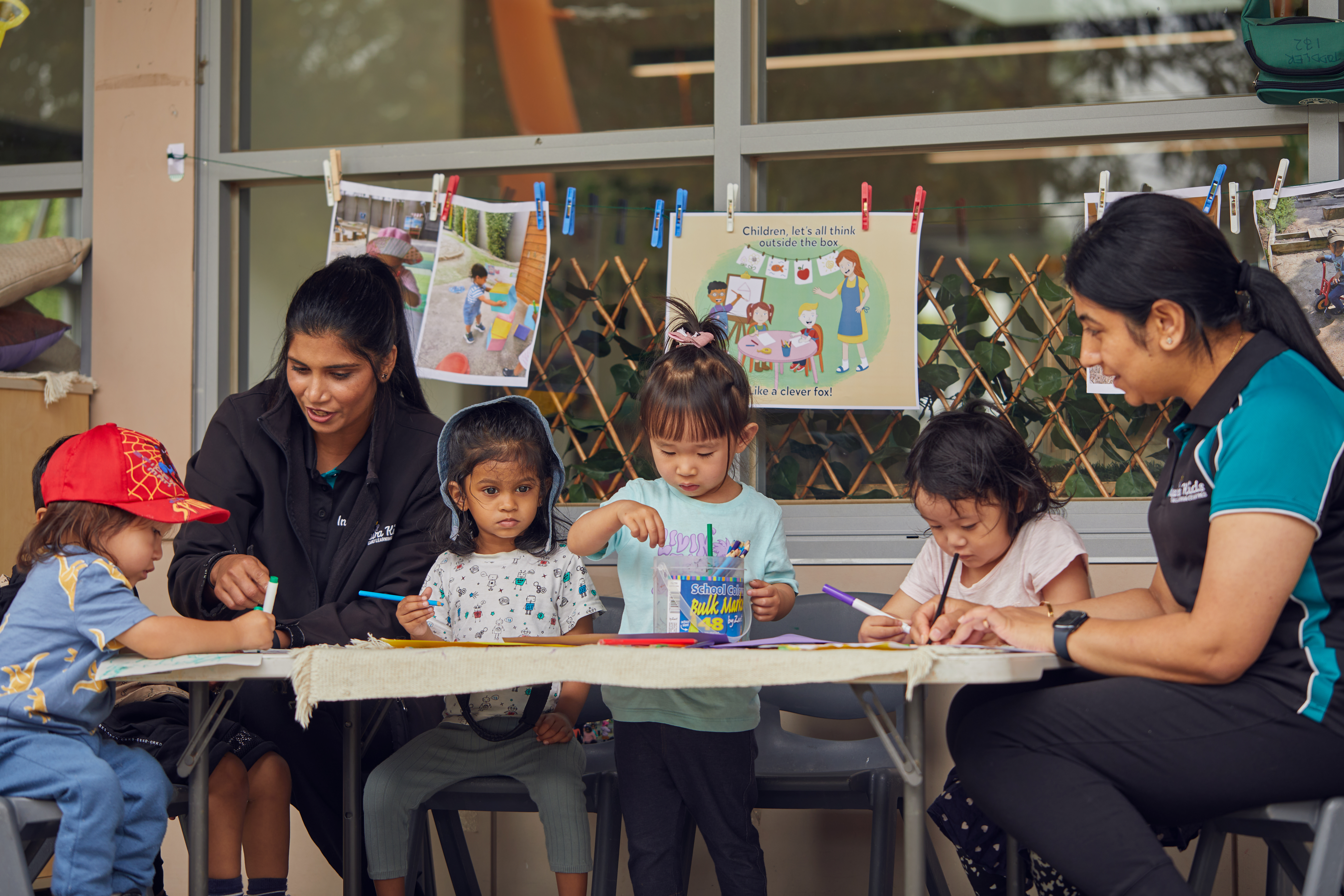
Early maths can sometimes feel abstract for young children if it is introduced through pressure or one-note games. When children are given chances to explore maths through play and hands-on experiences, math can be fun to learn, therefore fostering an enthusiasm for learning STEMs
At Inspira Kids, children are supported through age-appropriate, play-based learning experiences that make these early math concepts easier to explore and apply. Book a tour with us to find out more about our curriculum at your nearest center!