Our Insights
Understanding Your Child Better
Our Insights
Understanding Your Child Better
Our Blog

Cultural Inclusivity Teaching: How To Include Indigenous Culture In Childcare?
Including Indigenous culture in early childhood education is an essential part of nurturing respectful, inclusive, and socially aware learners. This is significant as culture holds a part of individual identity, which keeps their roots tight when they expose themselves to an integrated environment. Understanding and appreciating cultures could also contribute to overall well-being when learning at school.
In Australia, this responsibility goes beyond special events or shallow gestures - it is about being seen and appreciated, alleviating a sense of shame. With a rich history of profound Indigenous culture, Australia and cultural learning go hand in hand when it comes to arranging a lesson plan.
For educators and families, meaningful Indigenous inclusion helps children develop a strong sense of belonging and respect for the world’s continuing cultures. By this, children might adopt some lessons to show respect for different cultures’ customs and traditions.
Why Indigenous Culture Matters In Early Childhood Education
Australia’s Aboriginal and Torres Strait Islander cultures are the oldest living cultures in the world, dating back 65,000 years in Australia. Throughout important historical events, these Indigenous groups were slowly forgotten or blended into mass culture. Therefore, introducing children to these perspectives from an early age helps lay the foundation for understanding, respect, and reconciliation with these rich cultures.
In early learning settings, Indigenous inclusion supports:
Children’s sense of belonging and connection to place
Respect for diversity and different ways of knowing
Social responsibility and empathy
A strong foundation for lifelong learning and citizenship
It also aligns directly with the Early Years Learning Framework (EYLF) and the National Quality Standard, which emphasise inclusive practice, cultural competence, and partnerships with families and communities.

Indigenous Inclusion Is An Ongoing Everyday Practice
One of the most important things to understand is that Indigenous inclusion is not a one-off activity. It requires constant reflection and adjustment that celebrates inclusivity and individuality. Contrary to what parents believe, research on implicit cultural socialization practices recognizes that young children are constantly learning culturally relevant messages through observation of their parents and participation in routine activities (Rogoff et al., 2007). Therefore, it’s never too early to teach children about the importance of mutual respect for cultural diversity.
Meaningful inclusion could also mean:
Inclusion happens every day, not just during NAIDOC Week.
The cultural learning module is woven into routines, conversations, environments, and relationships.
Culture evolves through learning, reflection, and listening
When children see Indigenous perspectives as a natural part of their learning environment, it reinforces that these cultures are living, valued, and relevant today. Throughout learning experiences, children will eventually learn how to respect different cultures and accept Indigenous perspectives as norms.
Core Principles On How To Include Indigenous Culture in Childcare
Respect And Authenticity
Respectful inclusion begins with acknowledging that Indigenous cultures are diverse, living, and deeply connected to Australia. Educators should avoid assumptions, stereotypes, or generalisations, and instead focus on accuracy and respect. While people might assume that exposing harsh reality might demotivate children, it is more likely that by demonstrating cultural differences, children will learn how to adopt respectful manners when they encounter unfamiliar customs from other cultures.
This includes:
Using culturally appropriate resources
Acknowledging Traditional Custodians of the land
Being mindful of how stories, symbols, and language are used

Constant Learning And Reflection
Educators do not need to “know everything” to begin. What matters most is a willingness to learn, reflect, and grow. Often, children might feel more comfortable addressing these sensitive topics if educators are willing to learn with them.
Meaningful practice involves:
Professional learning about Indigenous perspectives
Reflecting on biases and assumptions
Seeking guidance from credible sources and local communities where appropriate
Creating A Sense Of Belonging
When Indigenous culture is visible and valued in a childcare setting, it helps all children feel that diversity is respected and celebrated. This also shows benefits for children coming from minority cultures family, whereas cultural identities are salient. Seeing Indigenous cultural learning modules could instill a sense of pride, encouraging these children to express their traditions and adapt them into everyday practices.
This sense of belonging supports children to:
Feel confident in who they are
Respect others’ identities.
Understand that multiple perspectives exist.
Shared Responsibility Between Families And Schools
Including Indigenous culture in childcare is a shared journey between educators, children, and families. When approached with respect, curiosity, and care, it helps create learning environments where every child feels seen, valued, and connected.
Meaningful inclusion is not tolerance, but a willingness to embrace new experiences.
Practical Ways To Include Indigenous Perspectives In Daily Childcare Routines
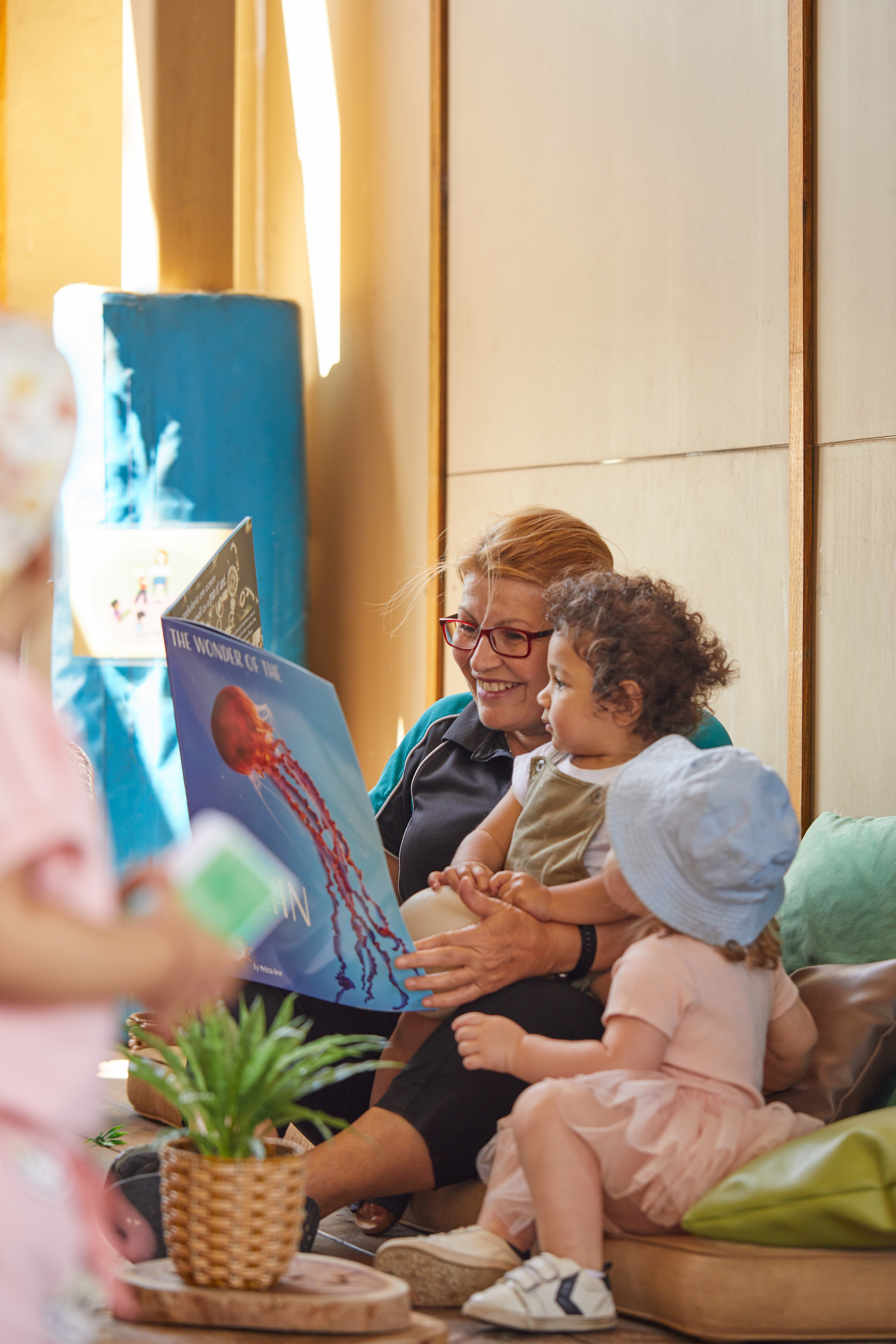
Storytelling And Books
Choose age-appropriate books by Aboriginal and Torres Strait Islander authors that reflect real experiences and voices. Stories can open conversations about culture, connection to Australia, and community in natural, child-friendly ways. It would be a great idea to introduce different perspectives to stories rather than just focus solely on one-sided stories.
Learning Environment
Small, thoughtful choices can make Indigenous perspectives visible every day. In class decoration or decorative corners, educators can also exhibit a wide range of art and crafts, including but not limited to:
Artwork inspired by Indigenous artists (with appropriate context)
Maps showing local country and language groups
Natural materials that encourage connection to land and environment
Language And Acknowledgement
Languages reflect cultural history significantly. Therefore, when introducing Indigenous languages, it is important to do so mindfully to avoid potential misunderstandings.
Learning local place names where appropriate
Including a daily or regular Acknowledgement of Country
Using respectful, correct terminology when addressing Indigenous histories.
Play-Based Learning
Indigenous perspectives can be incorporated into play through:
Nature-based exploration
Storytelling through art, music, and movement
Discussions about caring for the land and living things.
Celebrating Inclusivity With Inspira Kids Classroom
At Inspira Kids, inclusion, belonging, and everyday learning are a mission to create a secure, encouraging classroom environment that instills a sense of pride in children.
By embedding Indigenous perspectives into everyday practice, children learn that inclusion is simply part of how we live and learn together.