Collage Arts And Crafts Activity: Five Ideas for A Quick Creative Activity
A collage arts and crafts activity is a simple way for children to create, explore materials, and express their ideas in an unexpected way. With paper scraps, fabric, leaves, magazines, or cardboard, children can arrange and stick different materials to make their own picture.
In this article, we will look at what collage art is, why it supports fine motor skills and creativity, and how parents or educators can set up simple collage activities using everyday materials. You will also find easy activity ideas and age-based tips to help children enjoy the process without needing a perfect final result.
Collage Arts And Crafts Activity: A Simple Creative Activity That Builds Fine Motor Skills
Why Collage Activities Support Children’s Development
5 Simple Collage Activity Ideas For Children
What Is Collage Art?
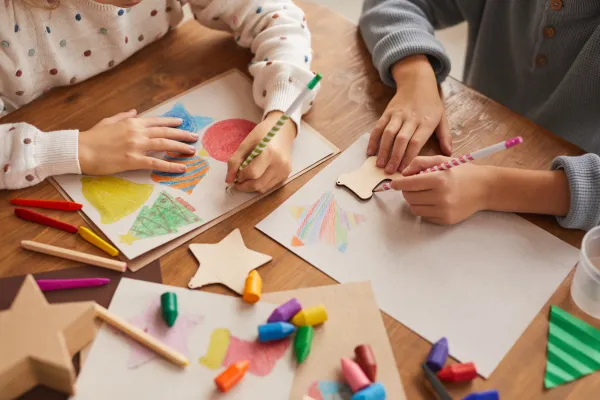
Collage art is a creative activity where children make pictures by arranging and sticking different materials onto a surface. These materials may include coloured paper, shredded paper, fabric, cardboard, leaves, flowers, magazine cut-outs, or textured items.
In early childhood, collage is usually process-focused. This means the value is in what children do while creating: tearing, cutting, choosing, arranging, sticking, talking, and experimenting.
Children may tear paper into small pieces, create shapes with their hands, layer different textures, or decide where each piece should go. The final picture does not need to look a certain way. What matters is that children are exploring materials, making choices, and expressing their ideas.

Why Collage Activities Support Children’s Development
Collage may look like a simple art activity, but it gives children many chances to practise important skills at the same time.
When children tear paper, pick up small pieces, spread glue, or use child-safe scissors, they are strengthening the small muscles in their hands and fingers. These movements help build the control children need for drawing, writing, dressing, and other everyday tasks.
Collage also gives children room to make choices. They can decide which colours, shapes, textures, and materials to use, then arrange them in their own way. This helps children express ideas, transforming what’s in their minds into real art. Unexpectedly, parents might be surprised at how vivid children’s imaginations can be.
In group settings, collage arts can also encourage cooperation. Children may share materials, talk about what they are making or explain why they chose a certain piece. At the same time, they are learning how to use craft materials with care, or even learn to collect seasonal materials to create creative winter artworks.
These small choices help children practise judgment and decision-making. They begin to think about what shape fits their idea, how much glue they need, where each piece should go, and how different materials can work together. These moments support early creative problem-solving, as well as fine motor skills while learning how to use different crafting tools.
5 Simple Collage Activity Ideas For Children
The following collage activities are easy to set up at home or in an early learning setting. Parents and educators can adjust the materials, level of support, and expectations depending on each child’s age and confidence.
Nature Collage
For a nature collage, children can collect safe natural materials such as leaves, flowers, seed pods, or small twigs, then arrange and glue them onto paper or cardboard. A small basket or tray can help children carry and sort what they collect.
Adults can guide the activity by talking about colours, shapes, textures, and how to care for plants and outdoor spaces. Children should be supervised closely, and materials should be safe to touch and use.

Recycled Materials Collage
A recycled materials collage uses simple items such as paper scraps, old magazines, cardboard, wrapping paper, or clean packaging. Children can tear, cut, arrange, and glue the pieces onto a base sheet to create a picture, pattern, or layered design.
This is a useful activity when families or educators want an economical art idea using materials already available. If cutting is difficult, children can tear paper instead, which still strengthens hand muscles and gives them control over the shapes they create. It also helps children see that everyday materials can be reused in creative ways.
Shape And Colour Collage
For a shape and colour collage, adults can prepare simple paper shapes such as circles, squares, triangles, and rectangles in different colours. Children can choose the pieces they like and arrange them into patterns, houses, animals, or abstract pictures before glueing them down.
Younger children may benefit from fewer shapes and colours, while older children can cut their own shapes or create more detailed patterns. This activity helps children practise colour recognition, shape awareness, early maths thinking, decision-making, and hand-eye coordination.
Texture Collage
A texture collage invites children to explore materials that feel different, such as fabric, felt, foil, cotton wool, tissue paper, ribbon, bubble wrap, or sandpaper. Children can touch, compare, choose, and stick the materials onto paper or cardboard.
To make the activity more concrete, adults can show children a simple photo, such as a tree, animal, house, flower, or outdoor scene. Children can then choose materials that match parts of the picture. For example, cotton wool may become clouds, sandpaper may represent a rough tree trunk, foil may become shiny water, and fabric may be used for grass, clothing, or soft animal fur.
This helps children connect what they see with what they feel. Adults can use simple descriptive words such as soft, rough, smooth, bumpy, shiny, or light as children compare the materials and decide where each texture belongs. This activity encourages sensory awareness, vocabulary, fine motor control, and creative thinking as children explore how different textures can work together to recreate an image in their own way.

Story Collage
For a story collage, adults can prepare picture cards or cut-outs of familiar things, such as animals, foods, people, trees, homes, or vehicles. Children can arrange the pictures into a scene, glue them down, and describe what is happening.
A helpful tip is to let children sketch their ideas first. This does not need to be a detailed drawing. A few simple lines, shapes, or marks can help children show where they want the characters, objects, or background to go. After that, they can layer picture cut-outs, paper pieces, fabric, or other materials on top of the sketch to build the story scene.
Simple prompts such as “Who is in your picture?”, “What are they doing?”, or “What happens next?” can help children share their ideas. The story does not need to be long or complete. Even a few words or simple descriptions can support imagination, sequencing, communication, and confidence.

How To Adapt Collage Activities By Age
Collage arts can work well for different age groups when adults adjust the materials, level of support, and expectations. At every age, the focus should stay on exploration and expression. Children do not need their artwork to look like an adult example for the activity to be valuable.
For toddlers, the activity should stay simple and closely supervised. They may enjoy tearing paper, pressing materials onto glue, or exploring soft textures more than creating a clear picture. Larger pieces, safe materials, and pre-glued surfaces can make the experience easier for them to manage.
Preschoolers are usually ready for more choice and independence. They may enjoy choosing colours, sorting shapes, comparing textures, or talking about what they are making. This is also a helpful stage for practising tearing, sticking, arranging, and using child-safe scissors with guidance.
Early primary children can often plan their collage with more intention. They may create scenes, patterns, story pictures, or mixed-media artwork by combining collage with drawing or writing. They can also explain their choices and work with other children on a shared piece.
Supporting Creative Development At Inspira Kids
At Inspira Kids, hands-on creative experiences help children practise dexterity, explore colours and textures, and express their ideas with existing materials they may encounter everyday. Collage activities support the Body pillar through fine motor development, the Mind pillar through creative thinking, and the Character pillar through self-expression, cooperation, and confidence.
Through guided art experiences, educators encourage children to think outside of the box and enjoy the process of creating. These simple moments help children build their art skills while developing curiosity, independence, and a positive sense of self.