5 Ways to See the World Through Your Child’s Eyes!
Adults and children can experience the same moment very differently. What feels routine to a parent may feel new, emotional, or overwhelming to a child.
Seeing life through the eyes of a child means slowing down to understand what children may be feeling, noticing, and trying to communicate. In early childhood education, this helps educators build trust, support communication, and guide children with care.
What Does A Child’s Perspective Mean?
A child’s perspective is the way a child sees, feels, and understands the world around them. This perspective is shaped by their age, development, personality, family life, language, emotions, and previous experiences.
Young children are still building the words and skills to explain what they feel. Sometimes their perspective appears through behaviour before it appears through speech. A child who refuses to join a group activity may be feeling unsure. A child who holds tightly to a toy may be learning about ownership and turn-taking.
This approach aligns with Australian early childhood expectations. Under the National Quality Framework, services must deliver educational programs based on children’s developmental needs, interests, experiences, and individual differences.

Why Seeing From A Child’s Perspective Matters
Seeing from a child’s perspective helps adults understand the need behind a child’s behaviour, instead of only reacting to what happens on the surface. In early childhood, behaviour is often communication. A child may not yet have the words to explain that they feel tired, unsure, overwhelmed, or disappointed.
This is important because Australian early childhood practice recognises children as active participants in their own learning and development. The Early Years Learning Framework includes outcomes around children having a strong sense of identity, wellbeing, confidence as learners, and communication, while the National Quality Standard includes relationships with children as one of its seven quality areas.
For example, a child who cries at drop-off may not simply be “being difficult.” From the child’s point of view, drop-off can mean separating from a trusted parent, entering a busy environment, and needing to reconnect with educators and peers. When adults understand this, they can support the child with a predictable goodbye routine, a warm greeting, and a familiar settling activity.
How Children Communicate Their Perspective
Children communicate in many ways in different stages of development. Some use words. Others use facial expressions, gestures, movement, play, drawing, sounds, silence, or behaviour.
A toddler might point, pull an adult’s hand, or repeat a word. A preschooler might use pretend play to act out something they are processing. A child who cannot explain a feeling may show it through body language, such as turning away, becoming restless, or staying close to a familiar educator.
This is why observation is important in early childhood education. Educators and parents should observe what children do, instead of judging based on what children say.
Responsive, respectful relationships are also part of the National Quality Standard, which recognises that relationships with children should promote security and belonging.
5 Ways To See The World Through Your Child’s Eyes
Seeing the world through your child’s eyes does not need to be complicated. It often begins with slowing down, noticing what they notice, and allowing small everyday moments to feel important again.
Stop And Notice The Small Details
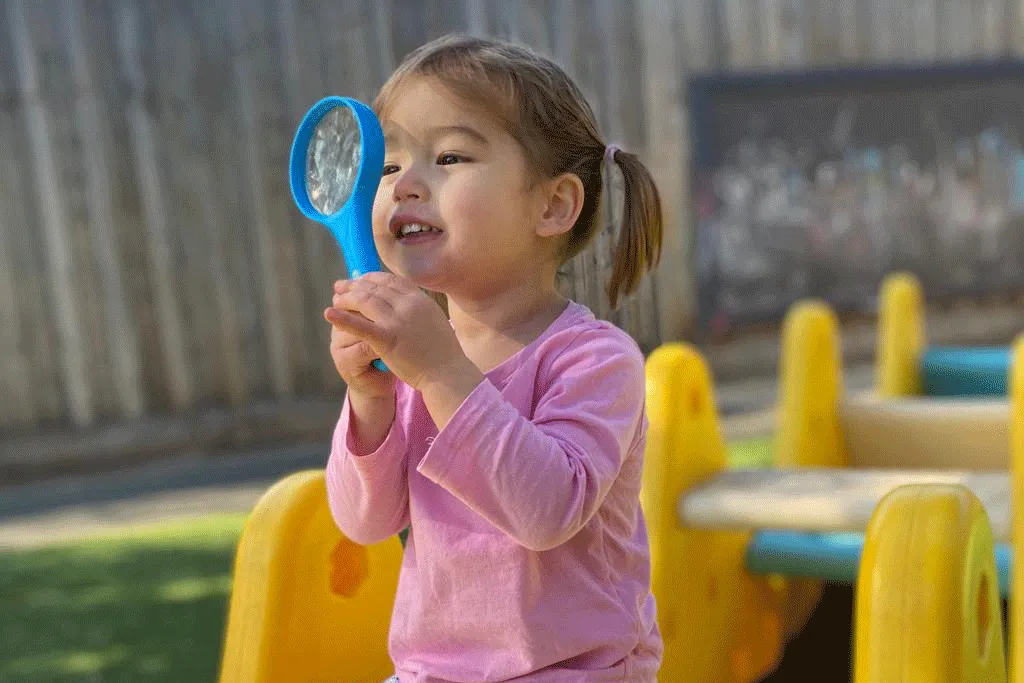
Children often pay attention to things adults walk past quickly. A flower, a leaf, a shadow, a puddle, or a bird outside the window can become a moment of curiosity.
Taking time to notice these details with your child helps you understand how they experience the world. It also gives children a chance to use their senses, ask questions, and share what they find interesting.
Take Interest In What Fascinates Them
A toddler may open and close a door many times. A preschooler may ask to read the same book again and again. To adults, this can seem repetitive, but to children, repetition is often how they learn.
When children repeat an action, they may be testing how something works, remembering a pattern, or building confidence. Instead of rushing them forward, adults can pause and ask, “What are you noticing?” or “What do you like about this?” This helps children feel that their interests matter.
Use The Five Senses With Intention
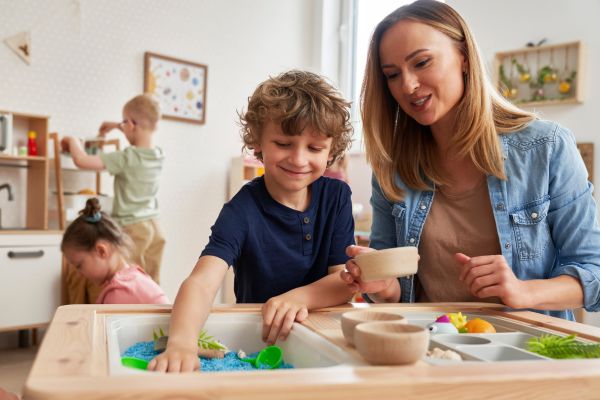
Children learn about the world through sight, sound, touch, smell, and taste. Sensory experiences help them understand texture, movement, temperature, sound, colour, and change.
Adults can support this by using simple language during everyday moments. You might talk about the smell of food cooking, the sound of rain, the feel of soft fabric, or the colour of leaves on a walk. These small conversations help children connect words with real experiences.
Make Space For Laughter
Children often find humour in simple, unexpected moments. A funny sound, a silly face, a playful song, or a small surprise can quickly become a shared moment of connection.
Laughter helps children feel relaxed and connected with the adults around them. It also reminds adults that joy can be found in ordinary routines, not only in planned activities.

Let Go Of Small Worries
Adults often carry busy schedules, tasks, and expectations. Children, however, are usually more focused on the moment in front of them.
Seeing the world through your child’s eyes can remind you to pause before reacting to every small mess, delay, or imperfect moment. Not everything needs to be corrected quickly. Sometimes, what matters most is the connection, conversation, or discovery happening in that moment.
When adults slow down and respond with patience, children feel more understood. They also learn that their thoughts, feelings, and discoveries are worth noticing.
How Adults Can Better Understand A Child’s Perspective
Seeing from a child’s perspective does not require adults to guess perfectly. It begins with curiosity. Adults can ask themselves:
What is the child feeling right now?
What happened before this behaviour?
Is the child tired, hungry, overwhelmed, or unsure?
Does the child understand what is expected?
Is the child trying to express a need?
What support would help the child feel safe and capable?
Simple responses can make a difference. Getting down to the child’s level, using a calm voice, pausing before responding, and offering clear choices can help children feel more understood.
Open-ended questions can also support communication. Instead of asking only “Did you have fun?”, adults might ask:
“What did you notice?”
“What was your favourite part?”
“What felt tricky?”
“Who did you play with?”
“What would you like to try next?”
These questions give children more room to share their view. It's common to not understand what children think about, since their vivid imagination could be misinterpreted.

Supporting Children’s Voices At Inspira Kids
At Inspira Kids, understanding a child’s perspective is part of caring for the whole child. Educators observe, listen, guide, and respond to children through daily routines, play, conversations, and relationships.
This connects with Inspira Kids’ Body, Mind, and Character approach. Through the Body pillar, children are supported with routines that help them feel settled and cared for. Through the Mind pillar, educators notice children’s interests and encourage curiosity through play and exploration. Through the Character pillar, children are guided to express feelings, build confidence, and learn how to care for others.
Every child develops at their own pace. By listening carefully and responding with respect, educators help children feel known, supported, and ready to take part in the day.
To see how Inspira Kids supports children through caring relationships and development-focused routines, book a tour at your nearest Inspira Kids centre.
FAQ
What Is A Child’s Perspective In Early Childhood?
A child’s perspective is the way a child sees, feels, and understands the world. It includes their emotions, interests, needs, communication style, and developmental stage.
Why Is It Important To Understand A Child’s Perspective?
Understanding a child’s perspective helps adults respond with more patience, build trust, support communication, and guide behaviour in a respectful way.
How Do Children Show Their Perspective?
Children may show their perspective through words, play, gestures, facial expressions, movement, drawings, choices, silence, or behaviour.
How Can Parents See Things From A Child’s Point Of View?
Parents can slow down, observe behaviour, listen carefully, name feelings, ask open questions, and consider what the child may be trying to communicate.
How Do Educators Support Children’s Voices?
Educators support children’s voices by observing, listening, asking questions, offering choices, responding respectfully, and planning experiences based on children’s interests and needs.