
Our Insights
Understanding Your Child Better
Our Insights
Understanding Your Child Better
Our Blog
25 Fun and Educational Activities for Childcare
Fun and educational activities are a vital part of every child’s learning journey in childcare. Through play-based experiences, children explore the world, build essential skills, and develop confidence in a safe, supportive environment. Activities matter in childcare because they transform everyday moments into meaningful learning, supporting physical, cognitive, social, and emotional growth while respecting each child’s pace.
This guideline will discuss 25 common activities in childcare, explaining how each one contributes to holistic child development.
Physical and Gross Motor Activities
1. Running
Early learners play running games by chasing friends, following paths, or racing outdoors. Running builds strong muscles, balance, and endurance while helping children release energy. As they adjust speed and direction, children also develop body awareness, coordination, and self-control, which are essential for physical confidence and safety.
2. Jumping
Jumping involves hopping over lines, jumping from low platforms, or bouncing to music. These movements strengthen leg muscles and improve balance and coordination. The repeated action of bending and pushing off helps children understand body control while building confidence as they master new physical challenges.
3. Climbing
Children climb on frames, steps, or soft structures using hands and feet together. Climbing develops strength, coordination, and spatial awareness. As young learners plan their movements and test limits, they also practise problem-solving, perseverance, and risk awareness in a safe, supportive environment.
4. Ball games
Ball games include rolling, throwing, catching, and kicking with peers or educators. These games improve hand–eye coordination and motor planning. Playing together teaches children turn-taking, teamwork, and communication, while movement builds physical strength and timing through repeated practice.

5. Swimming
Swimming allows our children to move freely in water through splashing, floating, and guided strokes. This activity strengthens the whole body and supports coordination. Water play also builds confidence and body awareness while helping children feel calm, regulated, and secure in a new sensory environment.
Fine Motor and Practical Life Activities
6. Stacking
Children stack blocks, cups, or natural materials to build towers. This play strengthens finger muscles and hand control. As stacks fall and are rebuilt, children learn about balance, size, and cause and effect, while developing patience, focus, and early problem-solving skills.
7. Scooping
Scooping activities involve transferring sand, rice, or water between containers. Children practise controlled hand movements that strengthen fine motor skills. This repetitive action also supports concentration and independence while introducing early concepts such as volume, comparison, and coordination through hands-on exploration.
8. Puzzles
Children play with puzzles by matching shapes or images into the correct spaces. This process supports hand–eye coordination and visual discrimination. As children trial different pieces, they develop memory, logic, and persistence, learning that challenges can be solved through effort and thinking.

9. Simple Food Prep
Children participate in washing fruit, spreading, stirring, or pouring ingredients. These actions develop coordination and practical life skills. Food preparation also builds independence and responsibility while supporting language development as children follow instructions and talk about healthy food choices.
Explore more: Best Cooking Activities for Toddlers in Childcare
Creative & Expressive Activities
10. Drawing & Painting
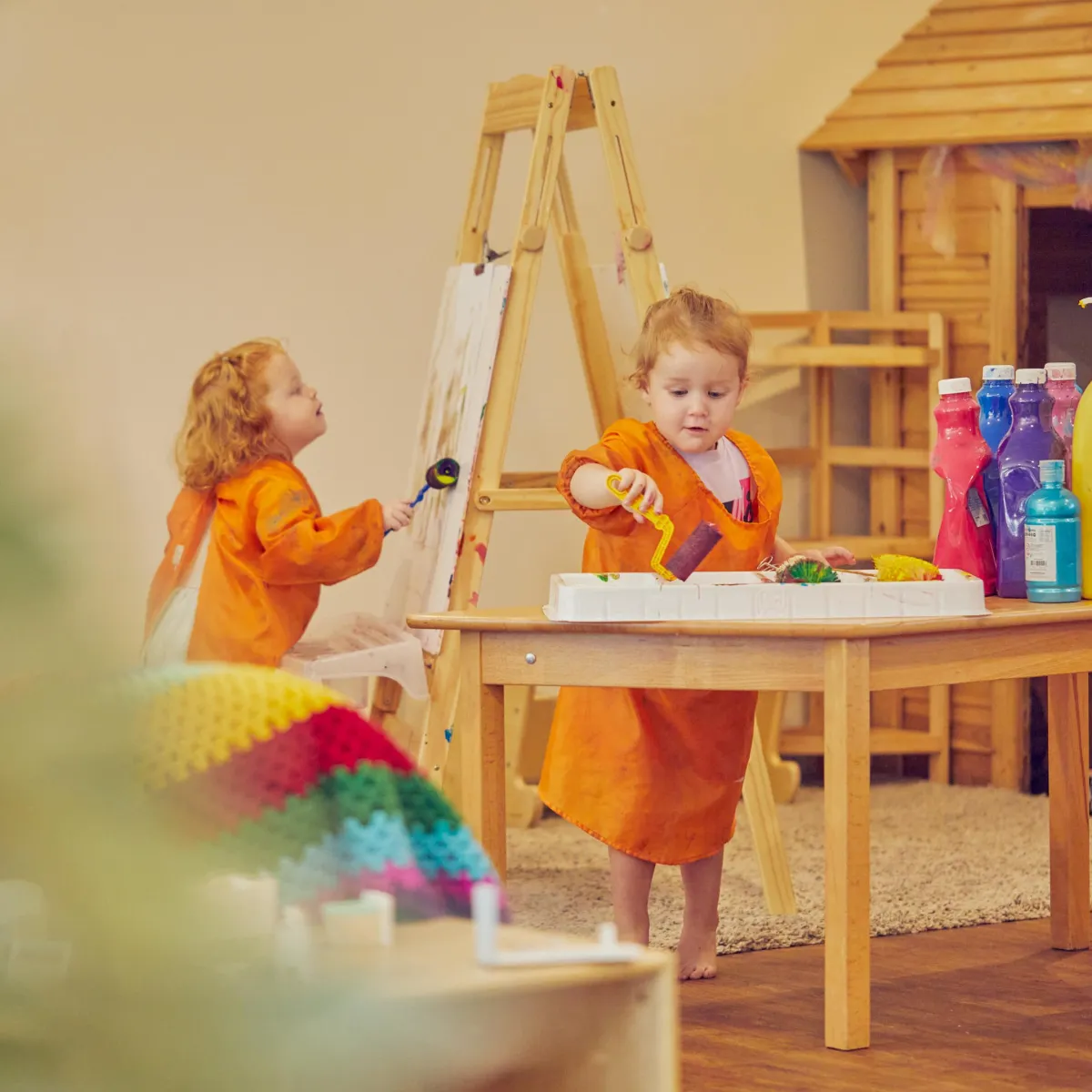
Early childhood learners draw and paint using crayons, brushes, or fingers to explore colours and shapes. This type of play strengthens fine motor skills and creativity. As children express ideas through art, they develop emotional awareness, confidence, and communication without needing words.
11. Music
Children engage in music by singing, clapping, playing instruments, or moving to rhythm. Music supports memory, listening, and language development. Group music activities also encourage social bonding, self-expression, and emotional regulation through shared joyful experiences.
12. Imaginative Play
Imaginative play includes pretending to be families, shopkeepers, or superheroes. Children create stories and roles together, which supports language, creativity, and social understanding. Through role-play, children practise empathy, problem-solving, and emotional expression in meaningful, playful ways.
Sensory & Mess Play Activities
13. Water Play
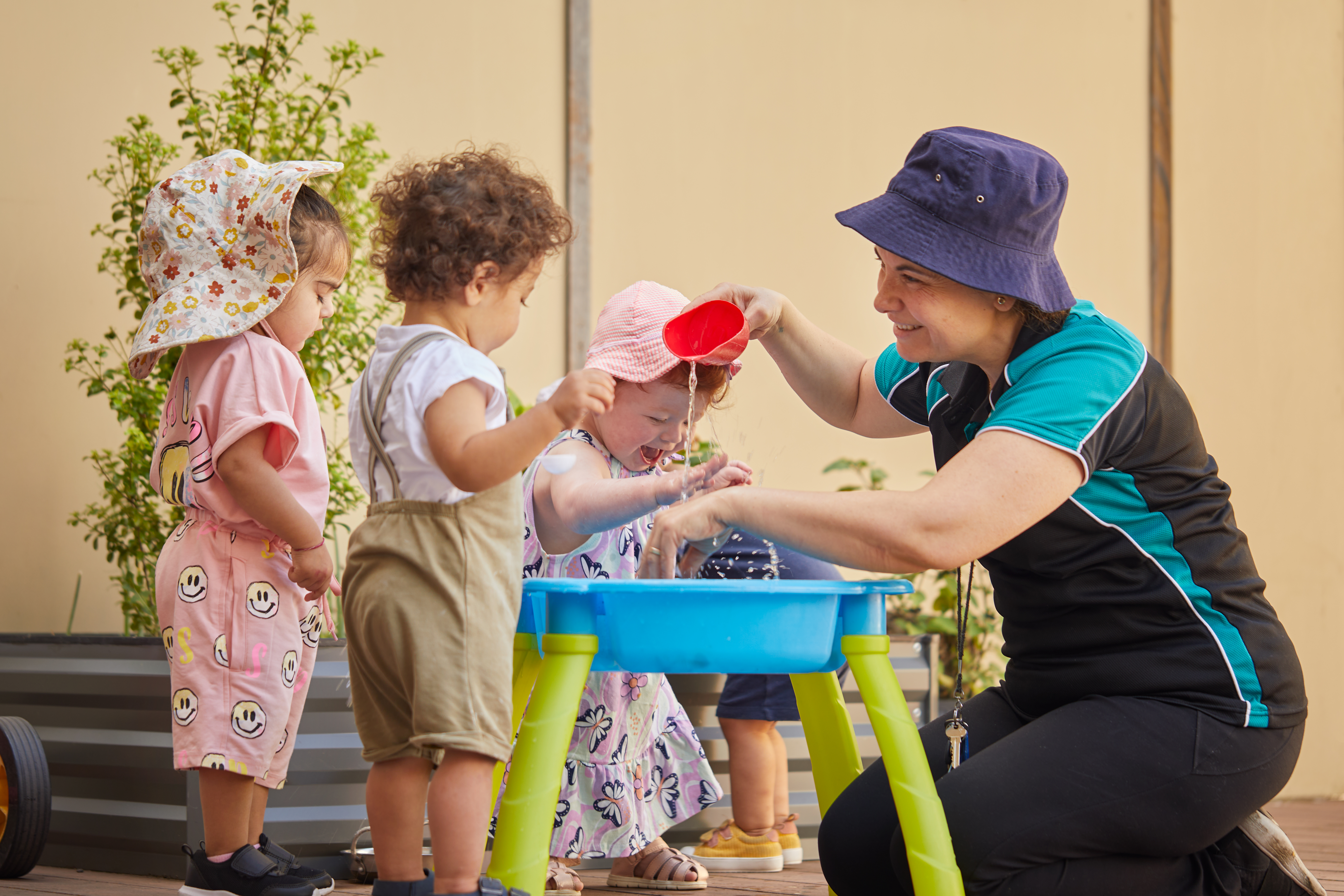
Water play invites children to pour, splash, and explore using cups, funnels, and simple tools. This engaging experience supports sensory regulation, fine motor control, and concentration. As children experiment with floating, sinking, and movement, they naturally develop early scientific thinking through playful and hands-on discovery.
14. Sand Play & Mud Play
Curious learners dig, build, and mould sand or mud using their hands and tools. These experiences strengthen muscles and sensory awareness. Open-ended play encourages creativity, collaboration, and experimentation, allowing children to explore textures while expressing ideas freely.
15. Sensory Bins
Sensory bins contain materials like rice, shells, or fabric for children to explore. Children scoop, sort, and touch different textures, supporting focus and language. This play also helps children regulate emotions while developing curiosity and cognitive exploration skills.
Early Literacy Activities
16. Storytime & Shared Reading
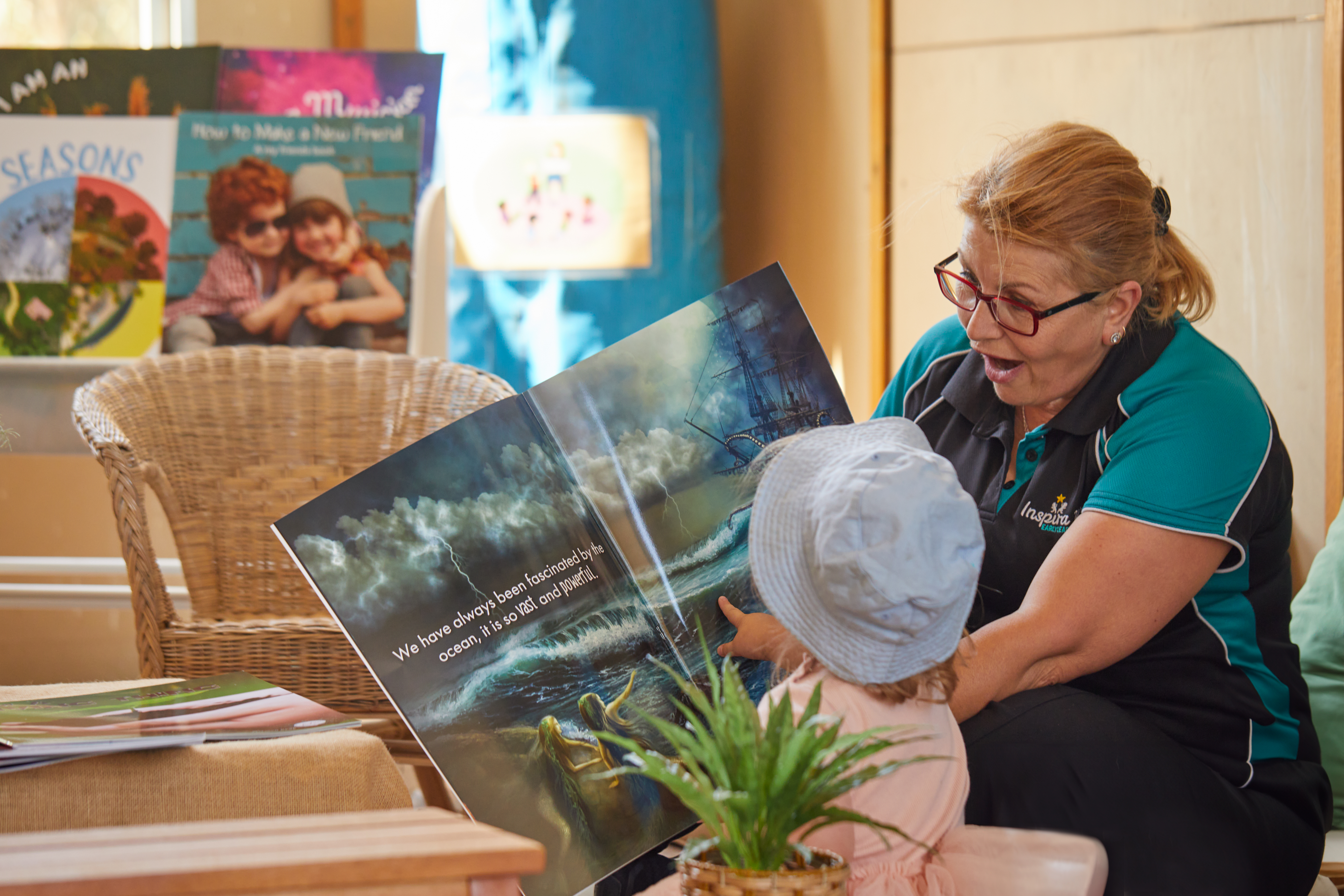
Children listen to stories, look at pictures, and join in discussions. Shared reading builds vocabulary, comprehension, and attention skills. Interactive storytelling encourages a love of books while supporting listening, imagination, and early literacy development.
17. Puppets
Children use puppets to tell stories and act out scenarios. This learning experience supports language development and confidence as young learners speak through characters. Puppets also help children express emotions, practise conversation, and explore social situations safely.
18. Singing and Rhymes
Children sing songs and repeat rhymes with actions. These activities strengthen memory, rhythm, and phonological awareness. Repetition supports early reading skills while movement and music make learning engaging, predictable, and more fun.

Cognitive Activities
19. Sorting and Matching
Children sort objects by size, colour, or shape and match similar items. This play builds logical thinking and categorisation skills. As children compare and organise materials, they develop focus, problem-solving abilities, and early mathematical understanding.
20. Counting
Preschoolers count toys, steps, or objects during play. Counting builds number sense and sequencing skills. Hands-on counting experiences help children understand quantity and patterns naturally, supporting confidence with early maths concepts.
21. Shape & Colour Recognition
Children identify shapes and colours through games, puzzles, and everyday materials. Recognising visual differences supports cognitive processing and memory. These skills form the foundation for later learning in maths, reading, and problem-solving.
Social & Emotional Development Activities
22. Group Games
Children play simple group games that involve rules and cooperation. These games teach turn-taking, patience, and teamwork. Playing together helps children manage emotions, follow social expectations, and build positive relationships with peers.
23. Role Play
Role play allows children to act out real-life situations like caring for others or visiting places. This supports emotional understanding and empathy. Children learn to communicate feelings, solve conflicts, and understand different perspectives through shared play.

Outdoor & Nature-based Activities
24. Nature Exploration
Children explore leaves, insects, and natural spaces outdoors. Nature play encourages curiosity, observation, and sensory awareness. It also supports physical health and environmental appreciation while allowing children to learn through direct, real-world experiences.
25. Gardening
Children plant seeds, water plants, and observe growth over time. Gardening teaches responsibility and patience. Through caring for plants, children develop science knowledge, teamwork, and a sense of achievement as they see the results of their efforts.

How These Activities Support Child Development?
Activities in childcare are intentionally designed to nurture all areas of development through play-based learning. When children are actively involved, they learn naturally by exploring, experimenting, and interacting with others in a safe and supportive environment. Purposeful activities allow educators to observe each child closely, respond to their interests, and extend learning experiences that align with individual developmental stages, abilities, and learning styles.
Strengthening physical and motor skills: Movement-based and hands-on activities help children build strength, coordination, and body awareness. These skills support overall health and prepare children for everyday tasks such as writing, self-care, and active play.
Supporting language and communication growth: Interactive activities encourage children to listen, speak, and express ideas. Through conversation, storytelling, and shared play, children expand vocabulary and gain confidence in communication.
Developing cognitive and problem-solving abilities: Activities that involve sorting, building, or experimenting help children think critically and make connections. This process supports early math, reasoning, and independent thinking.
Encouraging social skills and emotional regulation: Group activities teach cooperation, turn-taking, and empathy. Children learn to manage emotions, resolve conflicts, and build positive relationships.
Building confidence, independence, and curiosity: Successfully engaging in activities gives children a sense of achievement. This builds self-esteem and motivates them to explore, try new challenges, and enjoy learning.
Practical tips for engaging the children with everyone during the activities
Not all children feel comfortable joining group activities right away. Some children are more introverted or prefer observing before participating. Childcare educators can support engagement by creating inclusive, flexible environments that respect individual comfort levels while gently encouraging connection and participation.
Tips to engage children in group activities:
Offer small-group or parallel activity options
Allow children to observe before joining
Follow the child’s interests to invite participation
Provide positive encouragement without pressure
At Inspira Kids’ facilities around the VIC regions, parents are welcome to book a tour and observe activities in action, seeing how educators support every child’s unique learning style. Visiting the childcare environment helps families understand how thoughtfully planned activities nurture confidence, development, and a love of learning.