Our Insights
Understanding Your Child Better
Our Insights
Understanding Your Child Better
Our Blog
Why Is Role Play Important for Learning in Childcare?
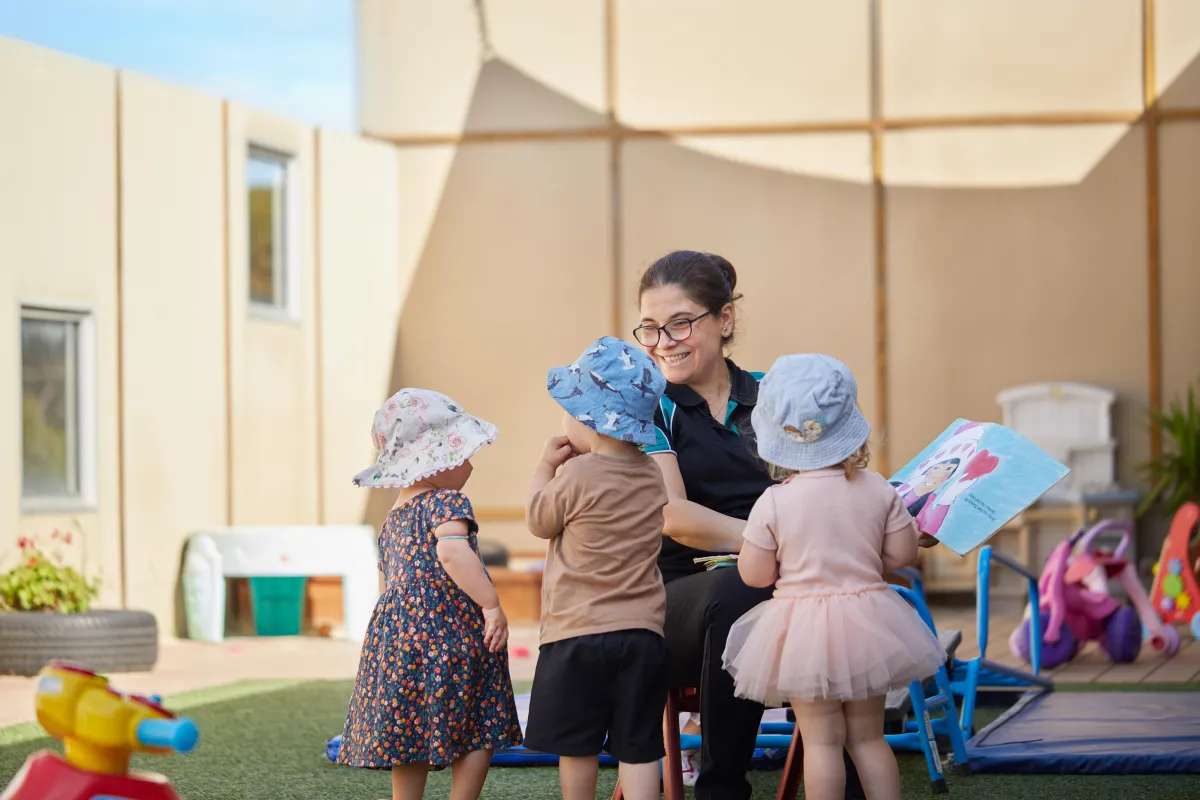
For young children, play is how learning begins. Through simple pretending, children make sense of everyday routines, relationships, and the world around them. In childcare settings, role play is more than a fun activity. It is a natural way for children to express ideas, practise communication, and build confidence in a safe, familiar environment.
This article explores why role play is an essential part of early learning and how it supports children’s social, emotional, and language development throughout their early years.
What Is Role Play in Childcare?
Role play in childcare is a type of play where children pretend to be different people, animals, or characters and act out everyday situations. It might look like children playing “family,” pretending to be doctors, shopkeepers, builders, teachers, or even cooking in a play kitchen.
Through these experiences, children begin to make sense of the world around them using language, movement, and interaction.
While this play is led by children, in an early learning environment, the children are supported by educators with open-ended materials, realistic props, and flexible spaces that invite children to explore ideas in their own way.

Why Role Play Is Important for Learning in Early Childhood
In early childhood, learning is often most meaningful when it feels connected to everyday life. Pretend play allows children to explore relationships, test ideas, and revisit familiar situations in a safe and supportive way. When educators support these experiences thoughtfully, learning extends across several areas of development without pressure or formal instruction.
Supporting social and emotional development
Children practise interacting with others during shared play
Feelings such as care, frustration, joy, and empathy are explored naturally
Turn-taking and cooperation develop through experience
When children act out familiar roles, they often rehearse real-life social situations in a low-risk environment. Educators frequently observe that children become more comfortable expressing emotions and navigating peer interactions through these shared experiences. Over time, this supports emotional awareness and growing confidence in social settings.
Building language and communication skills
Children use words to share ideas and negotiate play
Vocabulary grows through meaningful, real-world context
Listening and responding skills are practised naturally
During imaginative play, communication has a clear purpose. Children talk to be understood, to respond to others, and to keep play moving. In practice, this often provides a richer context for language development than structured activities alone, as children are motivated to communicate for reasons that matter to them.
Developing thinking and problem-solving skills
Children experiment with ideas and possible outcomes
Plans change as challenges arise
Flexible thinking develops through trial and adjustment
As play unfolds, children constantly make decisions about roles, actions, and solutions. These moments encourage creative thinking and problem-solving, helping children learn how to adapt when things do not go as expected.
Strengthening confidence and a sense of belonging
Children feel valued when their ideas are accepted
Successful interactions build self-confidence
Shared play supports inclusion within the group
When children feel heard and supported, imaginative play becomes a space where they can take ownership of their learning. Feeling capable and included helps children build a positive sense of self and feel secure within the childcare environment.
Explore more: 25 Fun and Educational Activities for Childcare
Role Play in Childcare by Age Group: What Is Developmentally Appropriate?
How children engage in pretend play changes as they grow. These changes reflect developing language, social understanding, and awareness of the wider world. In childcare settings, educators consider each child’s age, interests, and individual needs to ensure experiences feel achievable and emotionally safe.
Toddlers (1–2 years)
At this stage, pretend play is simple and closely linked to imitation. Children may copy actions they see each day, such as feeding a doll, cuddling a soft toy, talking on a phone, or pushing a pram. These experiences help toddlers explore care, comfort, and movement in familiar ways.
Educators focus less on outcomes and more on providing reassurance, time, and a sense of safety. Simple props, close presence, and open-ended opportunities allow toddlers to explore play without pressure.
Early preschool (2–3 years)
As children grow, play becomes more social and expressive. Home corner play, kitchen activities, caring for toys, or pretending to shop allow children to explore routines and relationships together. Language use increases, and play often includes short sequences of actions.
At this stage, educators support learning by modelling language, encouraging sharing, and helping children navigate early social interactions, while still allowing play to remain child-led.
Preschoolers (3–4 years)
Preschool-aged children often enjoy more detailed pretend scenarios involving shared roles. Activities such as doctor play, café play, construction sites, or emergency services support communication, cooperation, and flexible thinking.
Educators observe closely and use professional judgement to decide when support is needed. This may include helping children resolve disagreements, negotiate roles, or extend play through gentle prompts.
Kindergarten age (4–5 years)
For older children, imaginative play often reflects a growing awareness of the wider community. School play, community helpers, cultural traditions, or travel experiences allow children to explore identity, responsibility, and social expectations.
Educators support this stage by providing inclusive environments that reflect different backgrounds and experiences, helping children feel confident as they prepare for transitions to school.
How Educators and Families Can Support Role Play Effectively
Pretend play develops best when children feel supported rather than directed. In childcare settings, educators support this type of play through observation, intentional planning, and gentle guidance. At home, families often support play by offering time, space, and emotional reassurance.
Helpful ways to support include:
Providing open-ended materials that invite imagination
Allowing time for ideas to develop without interruption
Observing before stepping in
Using gentle prompts instead of instructions
Respecting children’s ideas, even when play appears simple
When adults take this approach, children feel safe to explore ideas and express themselves. Listening, acknowledging emotions, and offering supportive language helps deepen learning while keeping play positive and empowering.
How This Approach Aligns with the EYLF
Imaginative play aligns closely with Australia’s Early Years Learning Framework (EYLF), which recognises play as a central context for learning and development. Through these experiences, children naturally engage with learning related to belonging, wellbeing, and communication.
Rather than teaching concepts directly, educators observe learning as it happens and use these observations to inform future planning. This ensures learning remains responsive, relevant, and grounded in children’s interests.
How Inspira Kids Supports Learning Through Role Play
At Inspira Kids, imaginative play is thoughtfully embedded into daily learning experiences as part of a play-based approach to early education. Educators create environments that invite exploration through realistic props, flexible spaces, and materials that reflect children’s everyday lives.
Support for imaginative play includes:
Purposefully designed learning environments
Educators who observe, listen, and respond to children’s interests
Experiences that respect each child’s pace of development
Inclusive practices that reflect family, culture, and community
Educators regularly reflect on children’s play to adjust environments and experiences, ensuring learning remains meaningful and inclusive. By supporting rather than directing play, children are encouraged to build confidence, communication skills, and a strong sense of belonging.

Final Thoughts
Imaginative play is a trusted and meaningful way young children learn in childcare settings. Through everyday pretending, children explore relationships, practise communication, and make sense of their experiences in ways that feel safe and relevant.
Understanding how this type of play supports learning at different ages helps families and educators appreciate its value beyond simple fun. When supported with care and professional judgement, these experiences contribute to children’s social, emotional, and cognitive growth over time.
In early childhood, learning does not always look formal or structured. Often, it happens through shared moments of imagination, conversation, and play. These moments lay the foundation for confidence, wellbeing, and a lifelong love of learning.