Our Insights
Understanding Your Child Better
Our Insights
Understanding Your Child Better
Our Blog
How to Choose a Childcare Centre: A Parent’s Guide
Choosing a childcare centre can feel overwhelming, especially for first-time parents who want the best start for their child. Families today have many options to explore, from long day care and family day care to kindergarten programs. Understanding the differences between each type of care helps you make an informed decision that supports your child’s growth and your family’s lifestyle.

Understanding the Childcare Landscape
The early childhood education and care sector operates under the National Quality Framework (NQF), which sets standards, regulations and assessment guidelines for services such as long day care, family day care and preschools. This framework ensures safety, consistency and high-quality learning experiences for all children.
Long day care is centre-based, offering extended hours to support working families and catering for children from infancy through to preschool age.
Family day care is delivered in an educator’s home, providing smaller groups and a warm, home-like environment.
Kindergarten or preschool programs focus on the year before school, generally for children aged four to five. These programs emphasise early learning, social development and school readiness, usually within school hours.
According to the Report on Government Services 2025, more than 90 per cent of children in the year before school were enrolled in a preschool program in 2024. Across the broader 0–5 age group, more than half attended government-approved childcare services, showing how important early education has become for families.
Explore more: Is My Child Ready for Childcare?
What Defines Quality in Childcare
Quality in childcare goes beyond modern buildings or playground equipment. In Australia, quality is measured through the National Quality Standard (NQS), a benchmark for early childhood education and care.
The NQS assesses seven key areas that shape each child’s experience:
Educational program and practice: how learning is supported and extended.
Children’s health and safety: creating safe, nurturing environments.
Physical environment: the quality of indoor and outdoor spaces.
Staffing arrangements: qualifications, ratios and professional relationships.
Relationships with children: building trust and emotional wellbeing.
Collaborative partnerships with families and communities.
Leadership and governance: how the centre is managed and improved over time.
Centres are rated as Exceeding, Meeting or Working Towards the NQS. For example, one Victorian centre recently achieved an Exceeding rating due to its multicultural learning program and low educator turnover. These factors help children feel safe, supported and part of a connected community.
Beyond Ratios and Curriculums
When comparing centres, many parents look at educator-to-child ratios first. These are set by national regulations to ensure every child receives the attention and supervision they need. Most states require:
One educator for every four children under two years old.
One educator for every five children aged two to three.
One educator for every eleven children aged three to five.
Ratios are important for safety and care, but they are not the only measure of quality. What truly matters is the connection between educators and children – their warmth, responsiveness and engagement.
Consider the story of Amelia, a Melbourne mum who first chose a centre with excellent facilities and perfect ratios. After a few weeks, she noticed her daughter becoming quiet and withdrawn. Although the staff were qualified, they often seemed distracted and rarely interacted with the children. When Amelia moved her daughter to another centre where educators greeted children by name and encouraged independence, the change was instant. Her daughter started smiling at drop-off again.
This story is a reminder that quality care is about relationships, not just ratios. Look for educators who genuinely engage with children, listen to them and celebrate small achievements. When educators show genuine care, learning and confidence naturally follow.
Routines, Meals, and the Daily Experience
A positive childcare experience is built on simple, consistent routines that make children feel secure. From morning hellos to playtime, mealtimes, naps and story sessions, a balanced day helps children learn, socialise and grow at their own pace.
Centres such as Milestones and Bright Beginnings operate under the Early Years Learning Framework (EYLF), which focuses on play-based learning, curiosity and independence. These principles prepare children for school and lifelong learning.
At Inspira Kids, these principles come to life through well-trained educators and strong partnerships with families. The centre works with The Biting Truth, a team of accredited dietitians, to create nutritious meals made fresh daily. Each menu is designed to support healthy growth and positive eating habits.

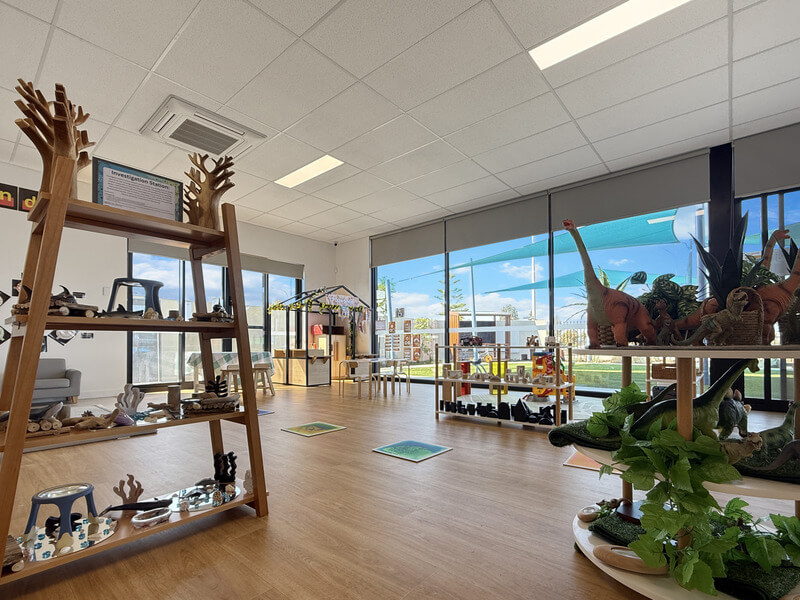
(An ideal classroom should be soaked up with natural daylight,
promoting exposure to the sun)
Culture, Values, and Fit for Families
Every childcare centre has its own culture and educational philosophy. Some focus on STEM learning, encouraging curiosity and problem-solving through science and technology. Others follow the Montessori approach, promoting independence and self-direction. Many centres also embrace outdoor or nature-based programs that connect children with the environment while developing creativity and wellbeing.
Busy Bees centres, for example, are recognised for their safety and quality standards, creating spaces where children learn with confidence. Inspira Kids focuses on nurturing care and school readiness, building warm, trusting relationships between educators and families.
Choose a centre that aligns with your family’s values and feels like a natural fit. When parents feel comfortable, children sense that security and thrive.
Making the Decision: A Practical Parent’s Guide
Choosing the right childcare centre is one of the most important decisions for any family, but it does not need to be overwhelming.
Research online to check NQS ratings, read parent reviews and explore each centre’s philosophy.
Visit in person and observe how educators interact with children. Consider whether the environment feels calm, safe and welcoming.
Ask practical questions such as staff turnover rates, communication methods and safety procedures.
While instinct plays an important role, the best decision combines intuition and information. If you would like to see what quality care feels like in action, book a visit to Inspira Kids. Meet our educators, explore our learning spaces and experience a nurturing environment where your child can grow with confidence.