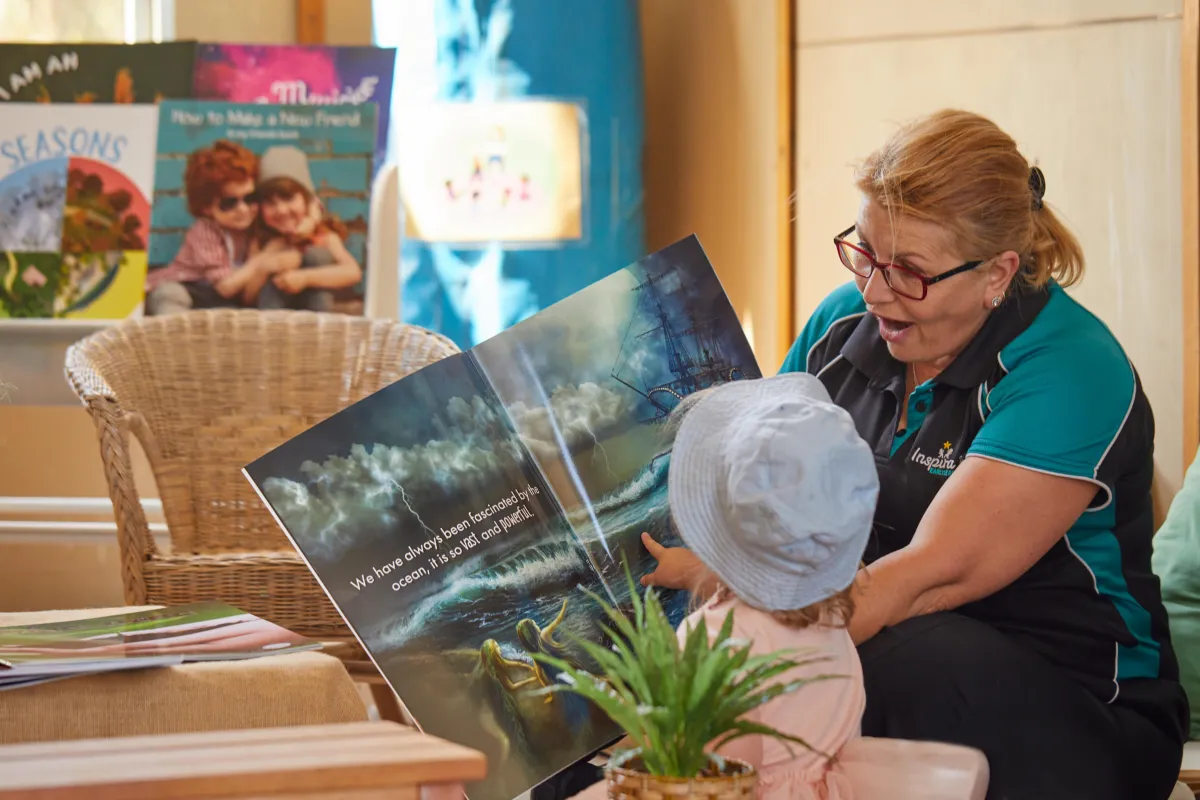
A child’s learning environment plays an important role in shaping how they feel, interact, and grow during the early years. In childcare, the learning environment goes beyond classrooms or educational materials. It includes the spaces children move through, the relationships they experience, and the emotional tone that supports their sense of safety and belonging.
For parents, understanding what contributes to a positive learning environment in childcare can support confident decision-making. A thoughtfully designed environment can nurture curiosity, wellbeing, and confidence, while helping children feel comfortable exploring, communicating, and learning through everyday experiences.
In Australia, early learning environments are part of daily life for many families. According to the Productivity Commission’s Report on Government Services 2025, there were 14,732 government-approved childcare services operating nationwide in 2024. These services support a large proportion of Australian children during their early years, highlighting the significant role childcare environments play in early development.
This article explores what a learning environment in childcare involves, why it matters in early childhood, and the key elements parents may consider when evaluating early learning settings.
In childcare, a learning environment refers to the combined influence of physical spaces, relationships, routines, and experiences that shape how children learn and feel each day. It is not limited to toys, displays, or classrooms, but reflects the overall atmosphere in which children explore, interact, and develop a sense of belonging.
A positive learning environment is intentionally designed to support children’s wellbeing alongside their learning. Safe and welcoming spaces, responsive relationships, and opportunities for play and discovery all contribute to an environment where children feel comfortable engaging with others and their surroundings.
Learning environments in early childhood are also child-centred and developmentally appropriate. Educators observe children’s interests, strengths, and needs, using these insights to guide how spaces, materials, and experiences are offered. Rather than following a rigid structure, the environment adapts as children grow, allowing learning to unfold naturally through everyday moments.
Importantly, learning in childcare is social and relational. Through interactions with educators, peers, and the environment itself, children develop communication skills, emotional awareness, and understanding. These early experiences help shape positive attitudes toward learning that extend beyond the early years.

In the early years, children learn not only through activities, but through how those experiences make them feel. A well-considered learning environment helps children feel secure, understood, and confident enough to explore their world. When children experience safety and support, learning becomes part of daily life rather than something imposed.
Parents often notice this difference in how children respond. In positive environments, children tend to engage willingly, communicate their needs, and show curiosity about their surroundings. They are more open to trying new experiences, asking questions, and interacting with others because exploration is encouraged without pressure.
This importance is reflected at a national level. Data from the Australian Bureau of Statistics (ABS) shows that in 2024 there were 341,568 children aged 4–5 enrolled in preschool programs, with 96% attending for at least 15 hours per week. These figures demonstrate how central early learning environments are to children’s daily lives during the preschool years.
Learning environments also influence emotional and social development. Familiar routines, consistent spaces, and caring relationships support children in managing emotions and building trust. Over time, this stability contributes to resilience, independence, and positive behaviour.
Just as importantly, early learning environments shape how children view learning itself. When learning is associated with encouragement, warmth, and meaningful experiences, children are more likely to develop a lasting, positive connection to learning as they grow.
A high-quality learning environment is not defined by how modern a space looks or how busy the schedule appears. Instead, it is reflected in how children use the space, how they interact with others, and how supported they feel throughout the day.
Flexible, Inclusive, and Engaging Spaces
Effective learning environments adapt to children, rather than expecting children to adjust to the space. Rooms are arranged to support a range of experiences, from quiet reflection to collaborative and active exploration. Materials are accessible, inviting children to make choices and engage independently.
Inclusive spaces also reflect the diversity of children and families within the community. When materials and activities acknowledge different cultures, abilities, and experiences, children are more likely to feel represented and included. This sense of belonging supports confidence and participation.
Opportunities for Children’s Agency and Choice
Children benefit from environments where they are trusted to take an active role in their learning. High-quality childcare settings offer opportunities for choice, whether through selecting activities, deciding how to engage with materials, or choosing how long to remain involved.
This sense of agency supports independence, decision-making, and self-confidence. Rather than directing every moment, educators observe and respond, guiding learning in ways that respect children’s interests and developmental readiness.
Strong, Consistent Relationships
Relationships are central to effective learning environments. Children feel more secure when they experience consistent, caring interactions with educators who know them well. These relationships provide emotional safety, allowing children to express themselves, manage feelings, and build trust over time.
Peer relationships are also supported through shared experiences and collaborative play. In environments where respect and empathy are modelled daily, social skills develop naturally and meaningfully.
A Balance of Safety and Appropriate Challenge
Quality learning environments encourage children to explore and take age-appropriate risks within safe and supervised settings. This may involve physical challenges, problem-solving experiences, or unfamiliar activities that invite children to test their abilities.
When managed thoughtfully, these experiences support resilience, persistence, and confidence. Educators play an important role in maintaining this balance, ensuring safety while allowing children the opportunity to learn through experience.
Responsive Educator Practices
Educator practice has a significant influence on the learning environment. In high-quality settings, educators observe closely, listen attentively, and respond to children’s cues and interests.
The 2024 National Early Childhood Education and Care Workforce Census reported 18,990 approved ECEC services across Australia, including 2,181 dedicated preschools, highlighting the scale and importance of professional, educator-led practice in shaping early learning environments nationwide.
Partnerships with Families
A strong learning environment extends beyond the childcare setting. Open communication and respectful partnerships with families create consistency between home and childcare, supporting children’s overall wellbeing.
When families feel informed and included, children benefit from shared understanding and continuity in their daily experiences. This collaboration strengthens trust and reinforces the learning environment as a supportive community rather than a standalone space.
Choosing a childcare centre can feel overwhelming, particularly when many environments appear similar at first glance. Looking beyond presentation and focusing on how the environment supports children’s wellbeing and learning can help parents make more confident choices.
During a visit or tour, parents may find it helpful to observe how children use the space rather than how the space is arranged. In supportive environments, children are often engaged, relaxed, and comfortable moving between activities.
Parents may also pay attention to how educators interact with children. Warm, respectful communication, attentive listening, and gentle guidance often indicate that relationships and individual needs are valued.
Asking questions about daily routines, learning experiences, and family communication can provide insight into whether an environment is flexible and responsive rather than routine-driven. Reflecting on how the setting aligns with a child’s personality and family values can also support informed decision-making.
At Inspira Kids, the learning environment is thoughtfully shaped through a clear educational philosophy and well-designed programs that support children’s learning, wellbeing, and sense of belonging. Rather than applying a fixed model, the environment is regularly reflected upon and adapted to respond to children’s interests, developmental stages, and everyday experiences.

The learning environment is supported through:
Purposeful learning spaces: Calm, welcoming indoor and outdoor environments that encourage exploration, creativity, movement, and quiet reflection, helping children feel secure while remaining curious.
Child-centred program design: Learning experiences that grow with children, recognising individual interests, abilities, and developmental readiness rather than following a one-size-fits-all approach.
The C.O.R.E Literacy Programme: A holistic, age-appropriate literacy programme that supports early communication through:
Listening and oral language development
Early reading experiences that build a love for books
Emergent writing through play, expression, and fine motor activities
Literacy is embedded naturally into daily routines and play, rather than delivered as formal instruction.
Strong educator practice: Educators observe children closely and adjust experiences in response to individual needs. Learning is guided through encouragement, modelling, and meaningful interaction, allowing children to feel supported without pressure.
Partnerships with families: Family involvement is encouraged through open communication and shared learning experiences, helping create consistency between home and childcare and strengthening children’s sense of belonging.
A thoughtfully designed learning environment in childcare supports more than early learning. It influences how children feel about themselves, their relationships, and their confidence in exploring the world.
For parents, understanding what makes a high-quality learning environment can offer reassurance when choosing a childcare setting. Observing, asking questions, and reflecting on how an environment supports a child’s individuality can help families make decisions that feel right.
Every child’s journey is different, and no single environment suits all children in the same way. What matters most is finding a setting where children feel a sense of belonging, where curiosity is nurtured, and where learning is guided with care and understanding.